Loading...
Please wait for a bit
Please wait for a bit
Click any word to translate
Original article by Sam Jones and agencies
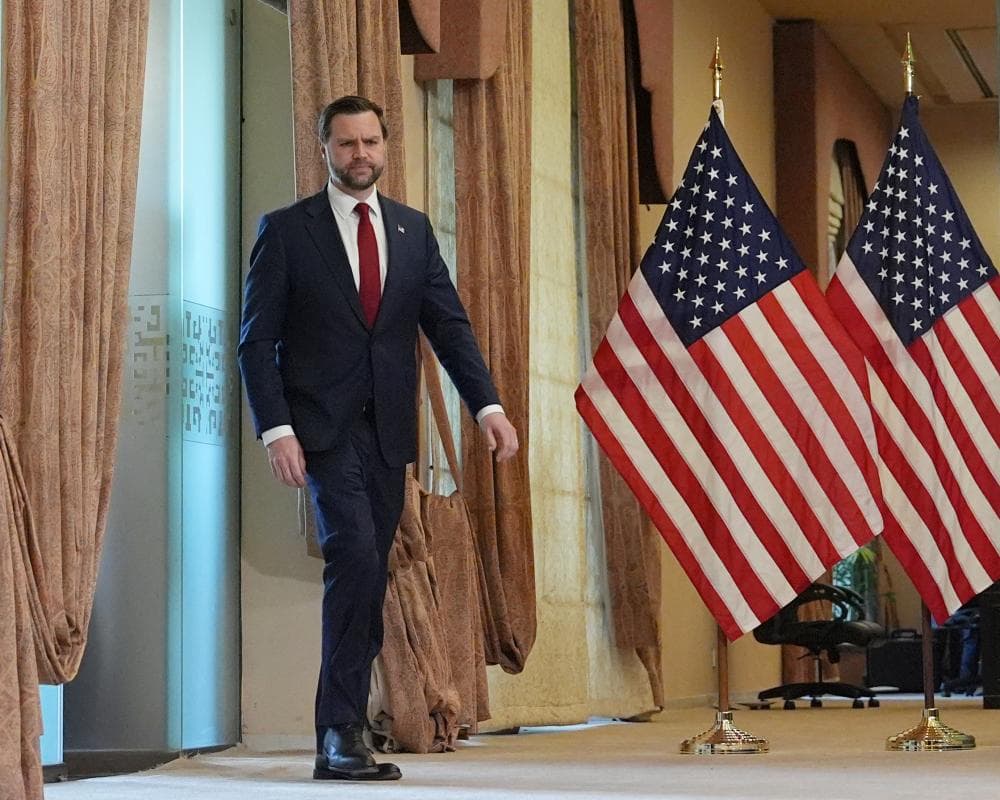
The US vice-president, JD Vance, has blamed the failure of marathon negotiations with Iran on the country’s refusal to abandon its nuclear weapons programme, while Iranian sources have hit back at “excessive” demands from Washington.
Vance, who left Islamabad on Sunday morning after 21 hours of talks with Iranian officials in the Pakistani capital, said his team had been very clear on its red lines as hopes faded of a quick end to the conflict that began on 28 February.
The vice-president said he spoke with Donald Trump at least half a dozen times during the talks, and one of the most significant points of difference between the two sides was on Iran’s nuclear programme.
“We need to see an affirmative commitment that [Iran] will not seek a nuclear weapon, and they will not seek the tools that would enable them to quickly achieve a nuclear weapon,” he said. “That is the core goal of the president of the United States, and that’s what we’ve tried to achieve through these negotiations.”
Vance added that while the failure to reach an agreement in Islamabad was “bad news”, it was “bad news for Iran much more than it’s bad news for the United States of America”.
Iran’s foreign ministry downplayed the apparent breakdown, saying that no one had held any expectation that talks with the US would reach an agreement within one session.
“Naturally, from the beginning we should not have expected to reach an agreement in a single session. No one had such an expectation,” ministry spokesperson Esmaeil Baqaei said, according to state broadcaster IRIB.
He said Tehran was “confident that contacts between us and Pakistan, as well as our other friends in the region, will continue”.
Iran’s semi-official Tasnim news agency meanwhile said “excessive” US demands had hindered reaching an agreement.
Neither Washington nor Tehran has said what will happen after the 14-day ceasefire initially agreed by the US, Iran and Israel, but Pakistani mediators called on the US and Iran to refrain from renewing hostilities.
“It is imperative that the parties continue to uphold their commitment to the ceasefire,” said Pakistan’s foreign minister, Ishaq Dar, adding that his country would try to facilitate a new dialogue between Iran and the US in the coming days.
The war, which began with US and Israeli strikes on Iran six week ago, has killed at least 3,000 people in Iran, 2,020 in Lebanon, 23 in Israel and more than a dozen in Gulf Arab states. It has caused lasting damage to infrastructure in half a dozen Middle Eastern countries.
The talks in Islamabad were the first direct US-Iranian meeting in more than a decade and the highest-level discussions since the 1979 Islamic Revolution. The final outcome could determine the fate of the fragile ceasefire and the reopening of the strait of Hormuz, a choke point for about 20% of global energy supplies that Iran has blocked since the war began. The conflict has sent global oil prices soaring.
Vance, the US special envoy Steve Witkoff and Trump’s son-in-law Jared Kushner met the Iranian parliamentary speaker, Mohammad Bagher Ghalibaf, and the foreign minister, Abbas Araghchi, for two hours before a rest, according to a source from the mediator Pakistan.
The Iranian delegation arrived on Friday dressed in black in mourning for late supreme leader Ayatollah Ali Khamenei and others killed in the war. They carried shoes and bags of children killed during the US bombing of a school next to a military compound, the Iranian government said. The Pentagon has said the strike is under investigation but Reuters has reported that military investigators believe the US was likely to be responsible for it.
“There were mood swings from the two sides, and the temperature went up and down during the meeting,” said another Pakistani source in reference to the first round of talks.
Islamabad, a city of more than 2 million people, was locked down for the talks with thousands of paramilitary personnel and army troops on the streets. Pakistan’s mediating role is a remarkable transformation for a nation that was a diplomatic outcast a year ago.
As the talks started, the US military said it was “setting the conditions” to start clearing the strait of Hormuz. The strategic waterway is central to the discussions. The US military said two of its warships had passed through the strait, and conditions were being set to clear mines, while Iran’s state media denied any US ships had been through it.
Before the talks began, a senior Iranian source told Reuters that the US had agreed to release frozen assets in Qatar and other foreign banks. A US official denied agreeing to release the money.
As well as the release of assets abroad, Tehran is demanding control of the strait of Hormuz, payment of war reparations and a ceasefire across the region including in Lebanon, according to Iranian state TV and officials. Tehran also wants to collect transit fees in the strait of Hormuz.
Trump’s stated goals have shifted, but as a minimum he wants free passage for global shipping through the strait and the crippling of Iran’s nuclear enrichment programme to ensure it cannot produce an atomic bomb.