Loading...
Please wait for a bit
Please wait for a bit
Click any word to translate
Vaccinations against H5 bird flu will be rolled out for Australian native bird species in captivity as the deadly virus continues to spread across the country.
The federal agriculture minister, Julie Collins, said on Tuesday that target native species in captivity would be prioritised with the first vaccinations to commence “in the coming days and weeks”.
Collins said state governments would manage the program and announce the target species soon.
“We’ve been very clear that we cannot stop the H5 bird flu from spreading among wild birds, but we can take action to protect the species most at risk,” the minister said. “Vaccination is now part of that response.”
Collins warned Australians they would continue to see “more spread and larger numbers – particularly of dead birds and mass mortalities around the country”.
The vaccination program would focus on captive species such as endangered birds that were part of conservation breeding programs in zoos and other facilities.
The federal environment minister, Murray Watt, said it was difficult to vaccinate wild birds because a full course required two doses. But the commonwealth did plan to vaccinate wild birds where possible, he said.
“It does take two vaccination doses to vaccinate birds, and it is difficult enough to catch wild birds once, let alone twice. [But] where it’s possible to vaccinate wild birds, we will do so.”
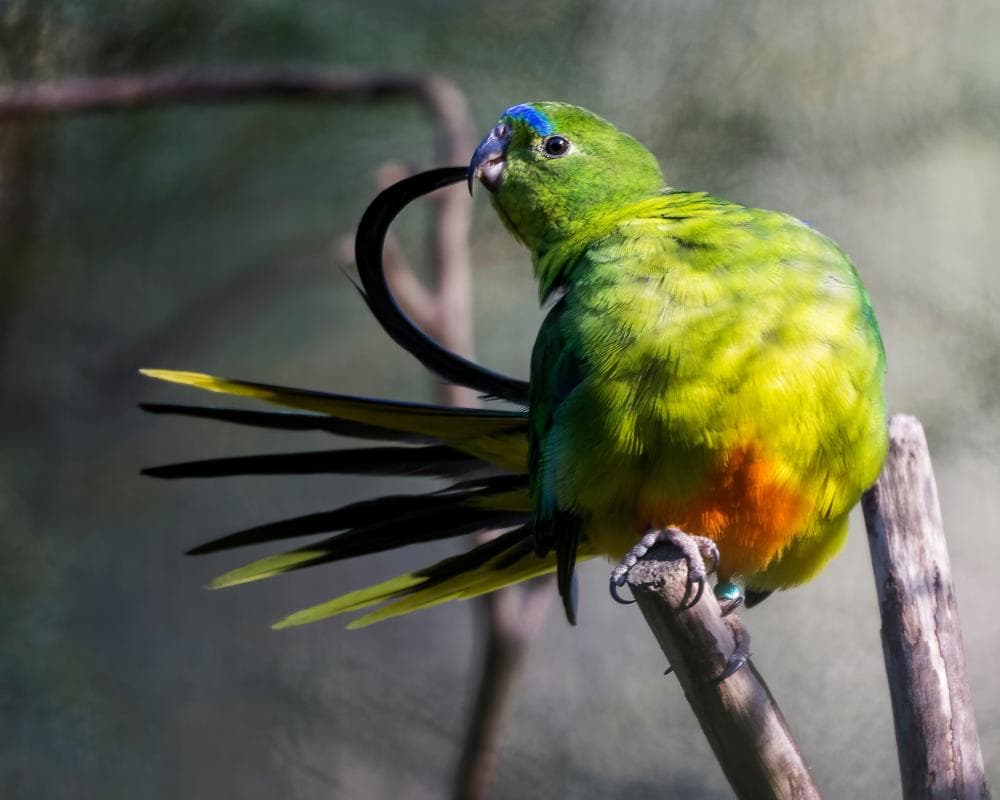
Endangered birds in captivity include the orange-bellied parrot, regent honeyeater and Western Australia’s black cockatoos.
Australia’s chief veterinary officer, Beth Cookson, said the vaccination rollout followed trials examining its safety and efficacy over the past 18 months.
The government did not say which species or facilities had participated in the pilot program.
“The trials and pilots that we’ve undertaken so far have provided us with some safety data across a range of different species,” Cookson said.
She said because the vaccines already in use had been developed for poultry, the government needed to gather safety data across a range of native bird species.
“As you can appreciate, birds come in all different sizes, and the vaccines that we’ve got are made for poultry,” she said.
“So it was really important as part of the preparedness that we had that safety information. We’ll continue to gather that information and to prioritise vaccination in those species where we’ve got sufficient evidence.”
The federal government said it would move from daily updates of H5 case numbers to a focus on major events such as mass mortalities as the number of infected species continued to rise.
The first mass mortalities occurred in South Australia and Victoria last week as H5 bird flu spread to new species, including silver gulls.
The South Australian government said on Tuesday that a peregrine falcon was among 33 new suspect cases in that state.
Last week, cases were detected in the Murray-Darling region of SA and New South Wales for the first time.
Prof John Woinarski of Charles Darwin University said the plan to vaccinate priority captive species was welcomed, but more work was needed, including for mammals at risk from bird flu.
“Trials with mammals is important,” he said on Tuesday. “It’s doable, in terms of the practicality of it, with seals and seal lions that come ashore.”
Woinarski called on governments to reveal which captive bird species would be vaccinated or subject to trials. “We also need to know if they have any adverse reactions,” he said.
The conservation biologist said it should be possible to vaccinate less mobile wild bird populations, such as the little penguin population on Phillip Island in Victoria.
Cookson said on Tuesday there were “no commercially available vaccines suitable for mammals” but the federal government was working closely with other countries “to follow some of the trials that are being undertaken, including in the US”.