‘The world needs to pay attention’: Nepalis and Tibetans in New York respond to the Himalayan disaster
Click any word to translate
Original article by Lok Darjee and Catherine Guerrero Knight in New York
Geeta Tamang was getting ready for bed when her aunts shared news that upended her world.
“My aunts came into my room and told me what had happened,” said Tamang, a 24-year-old computer science student at Queens College. She lives in Jackson Heights, home to one of the largest Nepali and Tibetan communities in New York City.
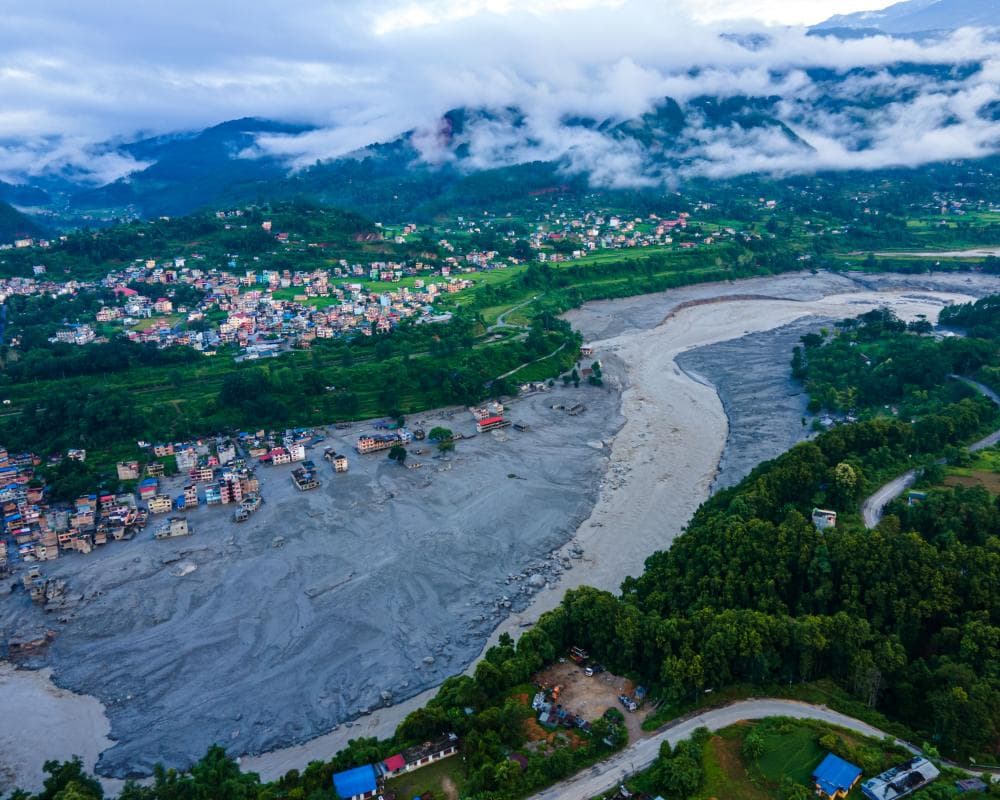
Tamang’s family village lies in Rasuwa near the Nepal-Tibet border, where a Himalayan glacier collapsed on Wednesday. The torrent of water, mud and rock tore through communities downstream, sweeping away most of the village where Tamang grew up.
As her calls to relatives went unanswered, the uncertainty only fueled her fears. Those she did reach were largely unaware of the disaster that had unfolded. From her bedroom in Queens, Tamang found herself breaking the news to her own family, one call at a time.
Across New York’s Nepali and Tibetan diaspora, the flood has stirred grief and fear for relatives back home, and desperation to help in any way possible.
More than 600 people have been confirmed dead, and almost 3,000 remain missing, including Tamang’s grandmother’s sister.
“My grandmother’s sister, she’s really like a grandmother to me,” Tamang said, her voice trembling. “I don’t think there’s any chance she survived.”
Across the border in Tibet, Chinese authorities have reported at least seven deaths. But the official toll has been met with deep suspicion among some Tibetans living abroad, including Sonam Tshiring, 58, a Tibetan refugee who settled in Queens three decades ago who believes the number of people killed in Tibet is far higher than Chinese authorities have acknowledged.
For Nepali and Tibetan communities thousands of miles away in New York and across the US, the catastrophe is about more than relatives missing and villages destroyed. It has sharpened the focus on an urgent injustice: who is being forced to bear the consequences of a warming planet, and why should communities that contributed so little to the climate crisis bear some of its greatest costs? Nepal is responsible for only a tiny fraction of global greenhouse gas emissions, yet its Himalayan communities face mounting dangers as temperatures rise and glaciers retreat.
The disaster has also arrived at a particularly fraught political moment, as the US has retreated from international climate commitments while dramatically reducing foreign aid and humanitarian assistance, leaving vulnerable countries with fewer resources to prepare for and recover from disasters.
The anxiety has reached a younger generation of Nepali Americans, some of whom have spent much of their lives moving between Nepal and New York.
Ninima Rai, 19, lived in Nepal before moving to New York when she was 11. She was still a child when a devastating earthquake struck Nepal in 2015. This time, she watched a catastrophe in her homeland from thousands of miles away.
Her relatives in Nepal were safe, she said, though communications had been disrupted. From New York, she and other young Nepalis have been following updates, sharing information and supporting organizations that are assisting flood victims.
“It’s hard to see how we can support them from so far away,” Rai said.
Tashi Sherpa, 16, was born in the United States but spent four formative years of her childhood in Nepal after her parents worried she might lose touch with their culture. She returned to New York for greater educational opportunities and describes herself as having grown up “between Nepal and New York”.
For Sherpa, crises in both countries have produced a peculiar sense of having two homes but, at moments, feeling secure in neither.
“As a Nepali American … it’s not just Nepal, but it’s America too,” she said. “I think it is a very chaotic time for us to feel like there is no safe space … and we feel very easily overwhelmed.”
Still, both teenagers described action as an antidote to helplessness. Friends in Nepal were preparing aid kits and collecting donations for food and clothing, Sherpa said, while young Nepalis in New York were sharing information and checking on relatives.
“There’s only so much that we can do, especially being so far away,” Sherpa said.
Tsomo Dasel, 40, is the owner of Himalayan Yak. Tucked on Roosevelt Avenue in Jackson Heights, Queens, it was New York’s first Nepali restaurant and is now a staple in the community. On Friday afternoon, she expressed her growing frustration with the US government’s response to the climate crisis. “The world needs to pay attention,” she said.
Back home in Nepal, her husband’s family is safe – but it’s not just her loved ones that she’s worried about. Dasel said the priority in the aftermath should be to exhaust all available resources to find the missing. Each passing moment is crucial to the search, which she fears won’t match the enormity of the disaster.
She voiced her distaste with the Trump administration’s humanitarian response, after the state department pledged an initial $500,000 in emergency aid for Nepal – an amount she called an “insult” to address a catastrophe with a death toll that’s in the hundreds, and still rising. “It’s a joke – if you don’t want to do anything, then don’t do it.”
Dasel is particularly concerned about a media landscape that often overlooks Tibet. “[Tibet] is a climate issue – what kind of world will we leave behind if our president doesn’t believe in climate change?” she asked.
While local non-profits addressing the disaster have advised direct donation, Dasel is ready to help in any way that’s needed. Since she arrived in the US in 2002, she’s been a champion of her community. However, it’s been difficult for her to help delegate support, with power outages slashing lines of communication in Nepal and Tibet.
“We don’t know how we can help them … so we’re sitting down together, like, OK, what are the resources? … Maybe their emergency needs … anything that, you know, they may not have, and we can provide them.”
When the time comes, she’ll be ready: “Whatever the team needs.”