Loading...
Please wait for a bit
Please wait for a bit
Click any word to translate
Original article by Matthew Weaver
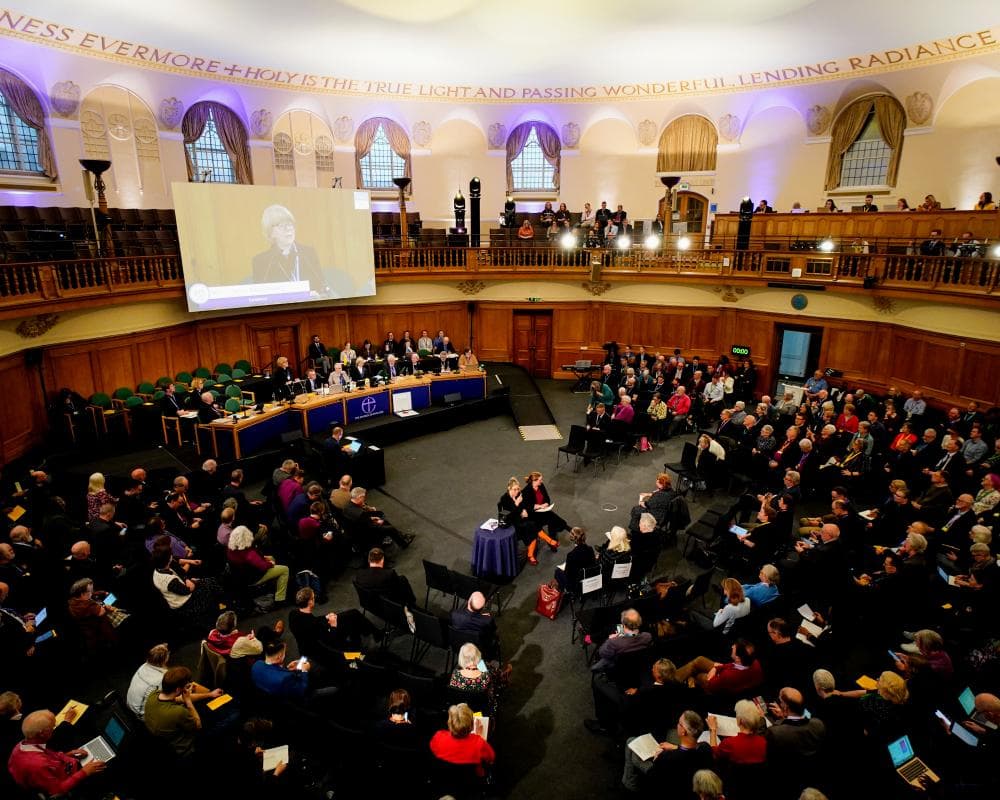
The latest General Synod debate on equal marriages comes after decades of bitter arguments between conservative and liberal factions that have frequently threatened to split the Church of England.
1979
The Gloucester report, prepared for the synod, acknowledges that individuals “may justly choose to enter a homosexual relationship involving a physical expression of sexual love”. But it is regarded as too radical to openly debate and is quietly shelved.
1987
The synod passes the controversial Higton motion stating that “homosexual genital acts are to be met by a call for repentance and the exercise of compassion”. The original motion, which says clergy who fail to urge homosexuals to repent should be removed from office, is not passed.
1988
The once-a-decade Lambeth conference of Anglican bishops exposes deep divisions over gay issues. It acknowledges that the issues remain “unresolved”.
1991
The house of bishops publishes Issues in Human Sexuality, which concludes that homosexuality is not an equal alternative to heterosexuality and that gay Christians who choose to be celibate should be praised.
1998
The next Lambeth conference upheld marriage as between a man and a woman, and rejected homosexual practice as incompatible with scripture. The move was the result of American conservative bishops enlisting the support of African and Asian allies in their battle with US liberals. While the conference condemned irrational fear of homosexuals, it opposed same-sex unions or any kind of blessing of them. It prompted 150 bishops to pledge to work for the full inclusion of the LGBTQ+ community into the church.
2002
The diocese of New Westminster in Canada becomes the first Anglican church to offer to bless same-sex unions.
May 2003
Jeffrey John, a gay priest in a long-term celibate relationship with another cleric, is chosen as the bishop of Reading. Under pressure from Rowan Williams, the then archbishop of Canterbury, John withdrew after a backlash from conservatives who threatened to cut ties with the C of E if his appointment went ahead.
November 2003
Gene Robinson, who was openly gay and living with his partner, is appointed as the bishop of New Hampshire. It prompted some conservatives to leave the US church and form a breakaway Anglican denomination.
2005
The introduction of civil partnership in England and Wales prompts the C of E to tell clergy that if they entered this new union they would have to pledge to remain celibate.
2014
Same-sex marriage is legalised in England and Wales. The house of bishops explicitly bars such unions for clergy on the grounds they undermine traditional teaching that marriage can only be between a man and a woman. The ban was widely ignored.
2020
The C of E states that sex belongs only within heterosexual marriage, and that sex in gay or straight civil partnerships “falls short of God’s purpose for human beings”. The affirmation of traditional teaching was seen as caving to pressure from conservatives.
2023
After calls from some bishops to end the ban on same-sex marriage, a compromise is proposed to the synod under which the ban would continue but blessings for same-sex couples would be allowed. Later, the synod narrowly agrees to back blessing same-sex couples but only on a trial basis. However, it was asked to hold back from standalone services until a registration process was in place.
July 2024
The synod votes to remove restrictions on using prayers for same-sex blessings in standalone services. The conservative C of E evangelical council says it would start a parallel province because of the decision.