Loading...
Please wait for a bit
Please wait for a bit
Click any word to translate
Original article by Angela Giuffrida in Rome
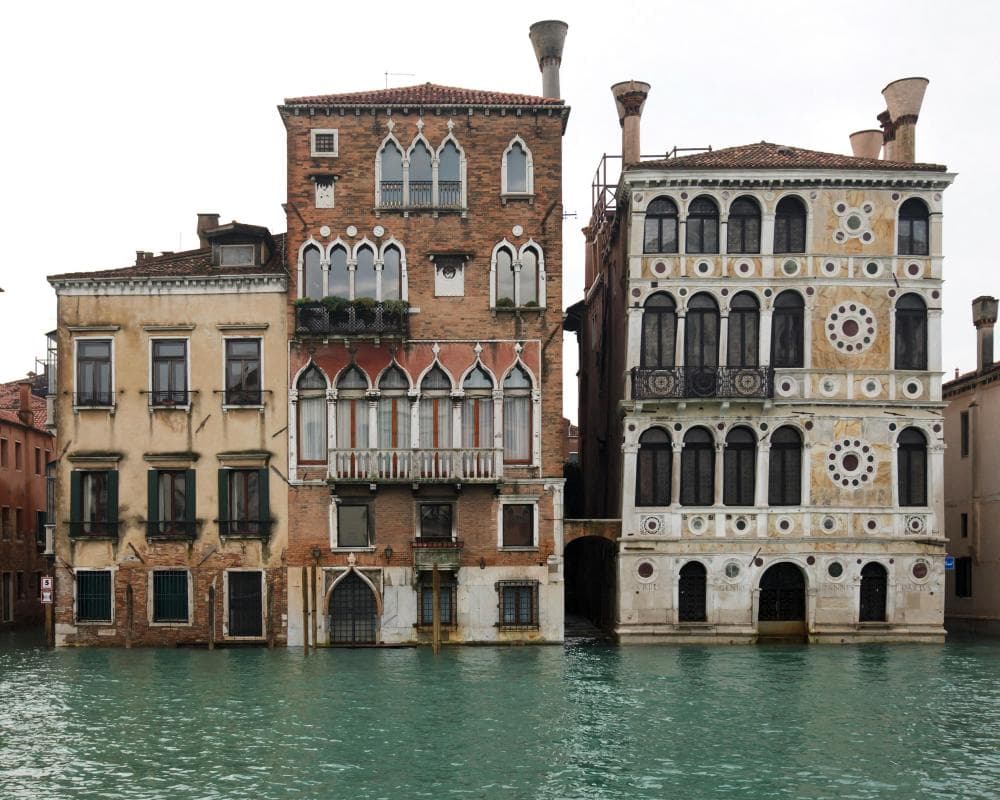
It ought to be an estate agent’s dream. Primely positioned on the banks of the Grand Canal in Venice, just steps away from the Peggy Guggenheim Collection, the storied Palazzo Ca’ Dario has shimmered on the water since the late 15th century, its elegant early Venetian Renaissance facade among the city’s most distinctive.
Named after its first owner, Giovanni Dario, a diplomat hailed a hero after securing a peace treaty with the Ottoman empire, over the centuries the palazzo has been home to nobles, merchants and even British rock music royalty. In 1908, it was painted by Claude Monet during his trip to Venice and one year later was cited by Henry James in his travelogue Italian Hours.
But the sprawling building, which comes with nine bedrooms, eight bathrooms and grand reception rooms filled with frescoes, has proved stubbornly difficult to sell – and not necessarily because buyers have been spooked by its price tag, reportedly €20m (£17.4m).
Estate agents have struggled to overcome its reputation as “Venice’s cursed palace” owing to a string of owners and guests who met untimely, and in some cases violent, deaths.
Now freshly renovated, the sale of Palazzo Ca’ Dario has been given another push, the challenge entrusted to the Venice unit of Christie’s International Real Estate and Engel & Völkers. Christie’s describes the building as an “architectural gem” boasting gothic arches, antique Murano chandeliers and a loggia terrace, while noting its location in a “peaceful” Venetian neighbourhood tucked away from the crowds.
What the marketing spiel doesn’t mention are the tragic tales that have embellished the local legends of it being jinxed.
As the story goes, the palazzo is associated with at least seven deaths, the most gruesome in 1970 when its then owner, Count Filippo Giordano delle Lanze, was murdered within its walls by his boyfriend, a sailor who fled to London and was himself later murdered.
Christopher “Kit” Lambert, at the time the manager of the Who, bought the property the following year. Although he claimed to have been unbothered by the supposed curse, he is said to have told friends that he slept elsewhere in order to escape the ghosts. Still, local people have blamed the curse for his descent into drugs, subsequent financial crisis and death in London in 1981 after falling down a flight of stairs.
In the 1980s, the palace was bought by the Italian financier Raul Gardini, who became embroiled in a high-profile corruption scandal and killed himself in Milan in 1993.
The legends also allude to the palazzo casting misfortune on those who simply came within striking distance or holidayed there. Mario Del Monaco, an operatic tenor, was planning to buy the property in 1964, but changed his mind after being involved in a serious car accident on his way to view it; John Entwistle, the Who’s bass player, died in the US in 2002 a week after renting it.
Palazzo Ca’ Dario was mostly derelict after that, and although it attracted interest from some prospective buyers enamoured of its architecture – rumoured to include Woody Allen – it is claimed they were put off by its ghostly undertones.
In 2006, the building was bought by an American firm on behalf of its current owner, whose identity has not been made public. The fact that the property has been empty ever since has only enhanced the tales.
Arnaldo Fusello, a general manager at Christie’s in Venice, said Venetians liked to tell a good yarn, especially to tourists. “For example, the gondolier who rows past the building, it’s a little bit like that,” he said.
He also pointed to the “hundreds” of inhabitants over the centuries who had lived to a ripe old age at the palazzo, including Dario, who died of natural causes at 80 years old.
Davide Busato, a historian in Venice, said the rumours had begun in the 1970s but got into full swing after the suicide of Gardini, generating a journalistic field day.
“The Venetians lapped it up,” he said. “They love telling a story and it’s quite normal for them to exaggerate, like they did with Poveglia island.” Poveglia is an abandoned and reputedly haunted island within the Venetian lagoon.
Venetians were an otherwise pragmatic bunch, and usually unswayed by superstition, Busato said, “but they do like to amaze people, especially those who come from the outside”.
Busato said Venice was full of historic buildings where murders and suicides had taken place and which today hosted luxury hotels. “As with all legends, the ones surrounding Palazzo Ca’ Dario get a little bit mixed up – the storytellers take a few concrete facts and magnify them.”
Fusello is confident the building will overcome its eerie reputation and now sell. He said it had so far attracted “a lot” of interest, from a mix of Italians and foreigners. “This is a place where history lives,” he said. “And if you want to live history, then this is the perfect home, although it’s important that whoever buys it dedicates themselves to keeping this property alive.”