Loading...
Please wait for a bit
Please wait for a bit
Click any word to translate
To compete at the highest levels of snowboarding, racers must master carving, edging and balance at speeds stretching the limits of imagination. They can fluently read the nuances of snow and fine-tune their bodies to cross the finish line faster than anyone else.
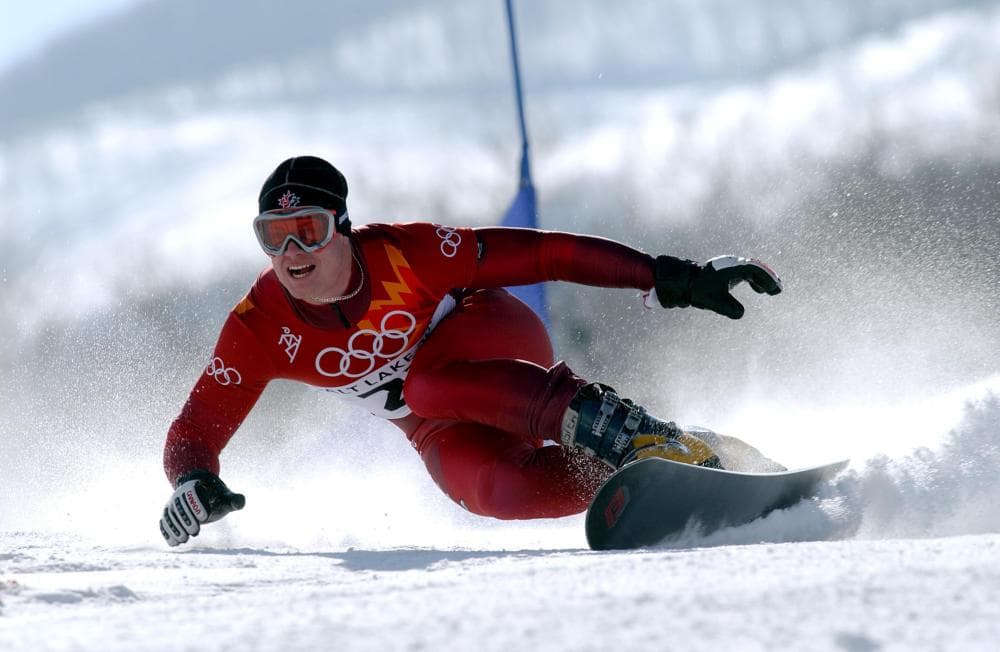
The Canadian snowboarder Ryan Wedding had these skills – but also the quality that catapults amateurs to an elite level: a highly competitive instinct to succeed that can at times manifest in a desire to crush fellow competitors.
Those traits were perhaps not as useful as he would have hoped when he competed in the 2002 Winter Olympics in Salt Lake City. The course was icy, he misjudged turns and in the end, he failed to reach the podium.
But the latter quality – the fierce and relentless desire for success – apparently served him in his rapid rise to leader of a notorious drug trafficking ring which, according to US authorities, raked in $1bn in cocaine sales each year. Wedding allegedly ordered the deaths of those standing in his way.
On Friday, top US law enforcement officials announced Wedding had been taken into custody, capping the Canadian’s arc, from prodigious young athlete to a drug boss allegedly nicknamed “El Jefe”, “Giant” and “Public Enemy”. His story has unfolded like the plot of an airport bookstore thriller, with allegations of a witness murder, a corrupt lawyer and shipments of cocaine moving undetected over national borders.
But while the core of the story is true, analysts suggest US authorities may have exaggerated the scale of Wedding’s enterprise, creating a kingpin who has now been seized with fanfare just as the Trump administration demands the Mexican government do more against drug trafficking.
By all accounts, Wedding’s early years in the northern Ontario city of Thunder Bay, could not have been further from a life of flashy cars, drug cartel alliances and an international manhunt. His grandparents owned the Mount Baldy ski resort, a modest hill that laid the groundwork for the skills needed to compete as a snowboarder at world-class venues.
After the disappointing result at the 2002 Olympics, the trajectory of Wedding’s life shifted dramatically. A profile in Toronto Life said he worked as a bouncer at a club, and aggressively worked out at the gym to build his physique.
He dabbled in flipping properties, acquired a small collection of expensive vehicles and began dressing in fashions popularized by gang members who frequented the clubs where Wedding worked.
In 2006, he was named in a search warrant investigating a marijuana-growing operation in British Columbia, but was never charged. Four years later, however, Wedding was convicted of conspiracy to distribute cocaine after attempting to buy the drug from a US government agent and was sentenced to four years in prison.
Incarceration meant that he missed the chance to compete for a hometown crowd when Vancouver hosted the 2010 Winter Olympics.
But prosecutors say he used the time to forge key relationships with drug dealers, expanding his network and developing trusted contacts that would, in years to come, give him immense reach.
The scope of his alleged network was laid bare in January when Jonathan Acebedo-García, a Canadian citizen, was killed at a popular restaurant in Medellín, Colombia’s second-largest city.
According to CBC News, Acebedo-García met Wedding in a Texas prison, and began working with him after both were released. He became a trusted ally – until he began working as an FBI informant. Wedding would later call him “the rat” and a “snitch”.
Prosecutors say that Wedding displayed his capacity for revenge when he used a Canadian blog called The Dirty Newz to track down Acebedo-García and his wife.
Authorities allege the website’s owner agreed to not post about Wedding. Instead, he allegedly accepted money to post a photograph of Acebedo-García, which he did on 5 November 2024 with the caption: “This guy single handedly 🐀 out one of the strongest underworld networks that this 🌍 has seen Good chance he’ll never be found again.” The site Dirty Newz has since been seized by US authorities.
Nearly three months after that post, gunmen located Acebedo-García, who had been living in Medellín for a year. They followed him to the upscale neighbourhood of El Poblado.
There, at 2.30pm on 31 January, he ordered food at Mi Arepa, a popular restaurant chain specializing in the traditional cornbreads. While he was eating, a gunman entered the establishment and shot Acebedo-García five times in the back of the head, killing him instantly, before fleeing on a motorcycle.
Wedding is believed to have sent a “bejewelled necklace” to one man involved in the killing, and circulated a photo of Acebedo-García’s body to his associates to serve as a warning for disloyalty.
The brazen, daylight murder in Medellín is the latest in a string of contract killings which prosecutors have linked to Wedding. In 2023, gunmen attacked a rental home in Caledon, Ontario, believing they were targeting rival criminals who had stolen a drug shipment. Instead, they killed Jagtar Singh Sidhu, 57, and Harbhajan Kaur Sidhu, 55, who had arrived in Canada four months earlier. Their daughter Jaspreet Kaur Sidhu, was shot 13 times and left critically injured. The next year, 39-year-old Mohammed Zafar was shot dead while sitting in his car in the driveway of his Brampton, Ontario, home over what police say were drug debts.
On 5 December, Ontario’s law society suspended the licence of a lawyer who the FBI says advised Wedding to have a key witness murdered.
Deepak Balwant Paradkar, a lawyer based in the Toronto suburbs, used the social media name @Cocaine_lawyer and cultivated a reputation for helping high-profile drug dealers evade charges.
“[Paradkar] told [Wedding], ‘If you kill this witness, the case would be dismissed,’” said Bill Essayli, the first assistant US attorney for the central district of California. “That lawyer is now in custody, and he’ll be extradited and brought to justice here in the United States.”
Paradkar has been released on bail pending extradition proceedings and has said that he intends to fight the charges.
For years, Wedding evaded capture by hiding in Mexico, allegedly under the protection of the Sinaloa cartel. In November, the reward for information leading to his arrest was upped to $15m – a bounty that put him on a level with the most powerful cartel bosses in Mexico.
“Make no mistake about it, Ryan Wedding is the modern-day iteration of Pablo Escobar,” said the FBI director, Kash Patel. “He is the modern-day iteration of El Chapo Guzmán.”
But security experts in Mexico were sceptical about the comparisons of Wedding to figures like El Chapo, who co-founded and led the Sinaloa cartel, one of the world’s most powerful criminal organisations, until he was extradited to the US in 2017.
“There’s no indication [Wedding] controls territory, nor that he’s at the head of an armed militia, nor that he’s a major player politically,” said Stephen Woodman, a security analyst in Guadalajara, Mexico.
And though US authorities claim Wedding’s enterprise was trafficking 60 tonnes of cocaine a year, this figure does not appear in the indictment, which only mentions specific cases of a few hundred kilos being moved at a time.
“I’d say this is a very performative [US] administration that likes to put faces on the issue of international drug trafficking,” said Woodman. “And you can expect films and documentaries to be made about this guy.”