Loading...
Please wait for a bit
Please wait for a bit
Click any word to translate
In justifying the joint United States-Israel airstrikes on Iran, US politicians have adopted humanitarian rhetoric, claiming that their actions will enable the liberation of the Iranian population from repression (Even taking Trump’s confused reasons for the Iran war at face value, it’s still a total disaster, 13 March). The arguments echo the justifications offered before the 2003 war in Iraq. But the strikes on Iran have even weaker grounds to be considered humanitarian than the war in Iraq.
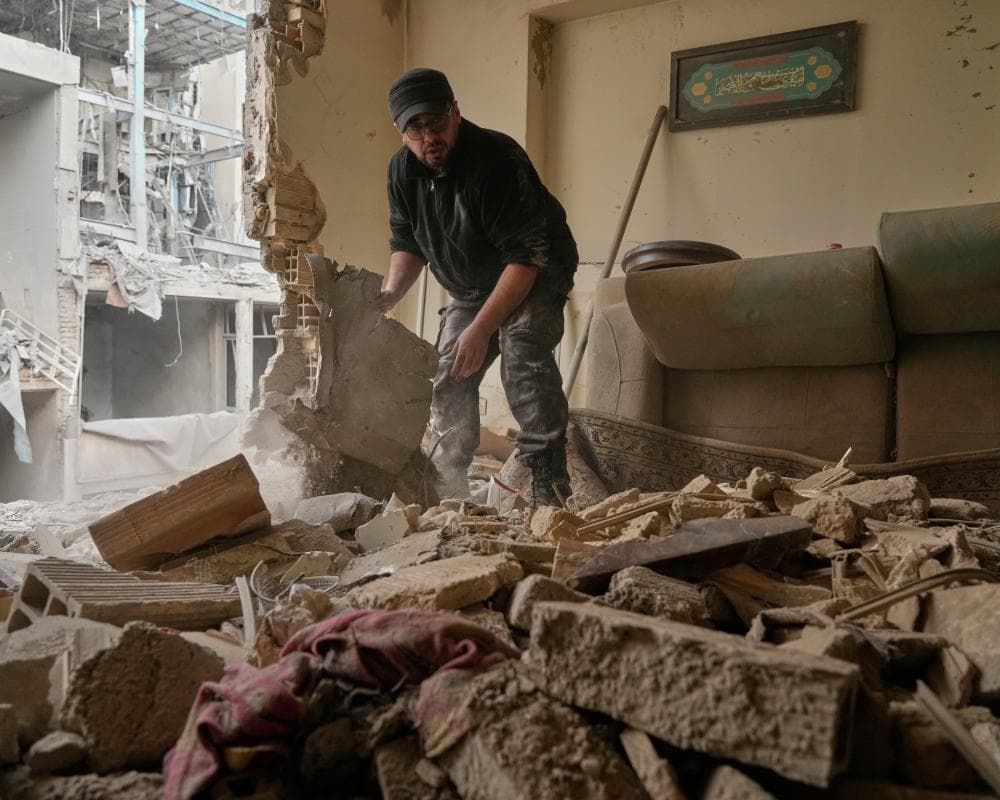
During the buildup to the Iraq war, there was at least a clear military objective: removing Saddam Hussein’s regime. By contrast, there is little evidence of a coherent plan for achieving regime change in Iran. Bombing alone is unlikely to produce it, yet no alternative strategy has been articulated. Humanitarian action would normally prioritise the minimisation of civilian harm. Yet early reports already suggest otherwise. An elementary school has been struck, killing 168 people, most of them young girls.
The Iraq war reflected extraordinary hubris and produced catastrophic consequences, including hundreds of thousands of deaths and lasting regional instability. The intervention in Iran threatens similar outcomes. Yet the architects of the Iraq invasion at least accepted a degree of responsibility for dealing with the aftermath. Colin Powell famously invoked the “Pottery Barn rule”: you break it, you own it. However flawed that principle proved in practice, it at least implied a duty to repair the damage caused. In the case of Iran, there appears to be no such commitment – only the prospect of breaking something and walking away.
We can therefore see that the war in Iran is not merely far from humanitarian – it is even worse than the 2003 war in Iraq, the quintessential unjust war of the past three decades.
James Pattison
Professor of politics, University of Manchester
• The US-Israel war against Iran marks a new low in many ways. As a young woman aspiring to work in international law, I see it as yet another chapter in an ongoing decline: most European leaders (unlike Pedro Sánchez) refuse to call it what it is because they will not stand up to bullies. Their silence echoes their silence on Gaza, Venezuela and all the other countries that Trump and his allies continue to threaten and undermine every single day.
I wish I could say this comes as a surprise – but it no longer does. What is most upsetting is the precedent it sets: violations of international law seem to matter only when they happen close to home or touch on European interests, as in Greenland or Ukraine. And, as if their silence were not shameful enough, many still choose to play by Trump’s and Netanyahu’s rules, effectively supporting their crimes.
Ivette Félix Padilla
Berlin, Germany
• Jonathan Freedland accurately addresses the weaknesses of the arguments put forward to justify the actions of the US and Israel in relation to Iran and its proxies. However, a further hugely significant point is missing. It is ordinary people, civilians, poor and elderly people, women and children who will bear the brunt of this war. As in Gaza, the bombs are obliterating everything. It is utterly unacceptable that hundreds of thousands of civilians are being told to evacuate Beirut.
Where is the accountability for the blatant disregard for international law? Just imagine what any western country’s response would be if anything like the way this war is being conducted was imposed on their population.
Chris Lake
West Hallam, Derbyshire
• It was good to read Jonathan Freedland’s cogent and hard-hitting analysis of Donald Trump’s war on Iran. I would like to add one thing. Beyond the human tragedy and the economic impact of the bombed oil wells, there is the catastrophe of the surge of carbon going straight into the atmosphere as the oil burns. This is even worse than Trump’s “drill, baby, drill”.
Diana Francis
Bath
• Have an opinion on anything you’ve read in the Guardian today? Please email us your letter and it will be considered for publication in our letters section.