Loading...
Please wait for a bit
Please wait for a bit
Click any word to translate
Original article by Miranda Bryant in Copenhagen
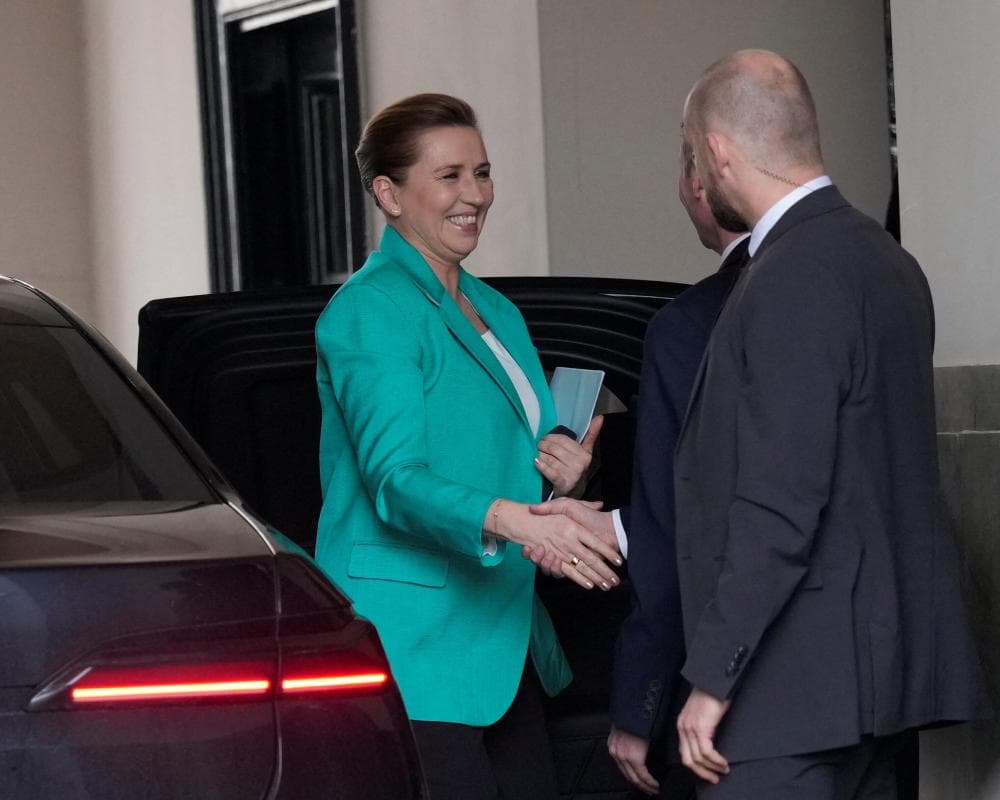
Denmark’s outgoing prime minister, Mette Frederiksen, has been given the first shot at forming another coalition government after an election which saw her leftwing bloc and the opposing rightwing parties fail to win a parliamentary majority.
A statement released by the Danish palace on Wednesday said Frederiksen had been asked to see if she could pull together a new majority involving her Social Democrats and two smaller leftwing parties, the Green Left and the Danish Social Liberals. The election had seen the Social Democrats fall to its worst general election since 1903.
The path is not straightforward, as together the three parties only have 68 seats, far short of the 90 required. Frederiksen – whose party remains the biggest force in the parliament - will, through discussions with 11 other parties, try to determine who can be the next prime minister and form a government.
Earlier on Wednesday, Frederiksen said voters had handed leaders a “troublesome” result but that a “government must be formed”.
Speaking in a debate involving the 12 party leaders in Copenhagen, she added: “The world is not waiting for us out there, and it has only become even more restless than when the election was called.”
Frederiksen had said she would start exploring the possibility of forming a left-leaning government with the support of Lars Løkke Rasmussen’s centre-right Moderates.
The failure of the left-leaning “red bloc” and right-leaning “blue bloc”, which won 84 seats and 77 seats respectively, to get a majority in the 179-seat parliament left the Moderates, with 14 seats, in a potentially powerful position to play a key role in forming a new coalition, putting Rasmussen, a committed centrist, in the position of kingmaker.
In his election night speech he appealed to Frederiksen and Troels Lund Poulsen, the leader of the liberal Venstre party, with whom he has been in coalition for more than three years, to “come down from the trees” and join him in the centre ground.
“What is clear – with all conceivable reservations – I think is that there is no red majority to the left of us, and there is no black-blue majority to the right of us,” he said, to cheers.
Rasmussen was the foreign minister in the last government and has twice been prime minister.
Frederiksen addressed her party at the Social Democrats’ party at Christiansborg in the early hours of the morning, saying the results were not as good as she had hoped but were “OK”.
“We reach out for responsibility – even when it comes at a price. I am still prepared to take on the job as Denmark’s prime minister. There is just no indication that it will be easy,” she said.
Poulsen said he was still a candidate for prime minister and ruled out forming a coalition with the Social Democrats. He told supporters: “We need a new government. And that’s also why I’m happy that Venstre has become the largest blue party.”
Coalition negotiations are expected to take weeks. Among the election’s biggest winners was the Green Left, which for the first time became the second largest party in Folketing, the Danish parliament. They are believed to have benefited from leftwing voters deserting the Social Democrats after their three years in a centrist coalition, during which time Frederiksen doubled down on her hardline stance on immigration.
At the opposite end of the spectrum, the far-right Danish People’s party (DPP) increased its support since the last election from five to 16 seats. The number is still far from the party’s peak levels of support in 2015, when it won 37 seats and 21% of the vote.
Naaja Nathanielsen, a high-profile minister from the Greenlandic party Inuit Ataqatigiit (IA), won one of the Arctic island’s two seats in the Danish parliament. The other was won – for the first time – by a representative of the independence party Naleraq, meaning that a critic of the Copenhagen-Nuuk union will be sitting in parliament at crucial time in the kingdom’s history.
Naleraq secured 24.6% of the vote in Greenland, a sharp increase from 12.2% in the 2022 election. “It is a very clear signal that the status quo is not acceptable,” the party’s new MP, Qarsoq Høegh-Dam, told Reuters.