Loading...
Please wait for a bit
Please wait for a bit
Click any word to translate
Original article by Kat Wong in Sydney and Cait Kelly in Kathmandu
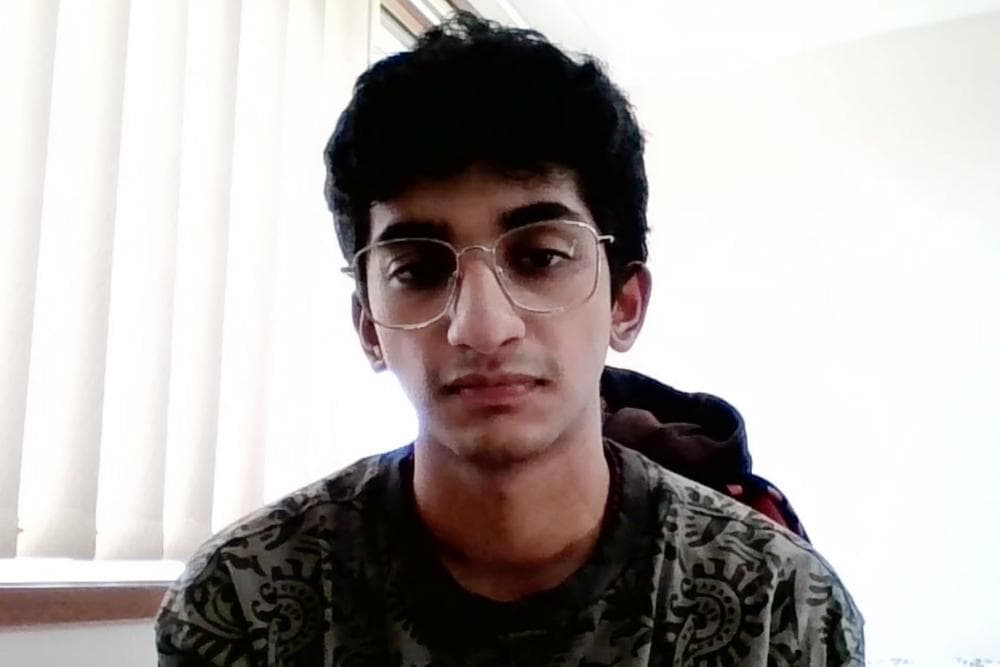
Akash Venkatraman’s parents wished him a happy 22nd birthday before they left for Nepal on a spiritual pilgrimage.
Three days later, a glacial collapse sent a torrent of mud, water and debris through the Nepal-Tibet border, bursting the banks of the Trishuli River, and sweeping away homes, bridges and roads.
He hasn’t heard from them since.
Venkatraman Balakrishnan, 52, and Chitra Venkatraman, 46, are among 38 Australians who have been reported missing after the deadly flash floods and landslides on Wednesday last week.
The couple and their family friends – Sreedharan Iyer, 52, Lakshmi Iyer, 50, and their sons Rishab Iyer, 23, and Rudhra Iyer, 20 – had been taking part in a pilgrimage to the sacred site of Mount Kailash.
They were staying in riverside accommodation in Syabrubesi with other members of the Himalayan Glacier Adventures tour group the morning the flood came in.
In the days since losing contact, Akash has cried – as a psychology student, he knows not to repress his emotions – but he has also tried to keep going.
His parents would have wanted him and his 17-year-old brother who is studying for HSC to maintain normalcy, but it is difficult, he says.
“What if I graduate and they’re not there? What if I get my first job and they’re not there?,” Akash says.
“Because everything you do, you do to make them proud.”
Sign up for the Breaking News Australia emailAkash’s uncle has now travelled to Nepal to search for clues while he and his brother try to help from home.
Their family has received an outpouring of support from the community, but as the days pass, Akash worries that Australians’ attention is falling away and that “efforts to find my parents and everyone else with them will also reduce”.
“The worst thing that could happen is that they hang on for seven or 10 days and no help comes – that’s my biggest worry,” he says. “Us losing attention could create that situation.”
More than 4,000 people have been reported missing since the floods and more than 1,000 have been confirmed dead.
Police in Kathmandu have urged relatives of missing tourists to provide DNA samples to assist with identification efforts.
Though five Australians previously believed to have gone missing in Nepal have now been confirmed safe, the government still holds “grave concerns” for those still unaccounted for.
In Kathmandu, the anxiety is palpable. The wall of missing loved ones at the teaching hospital has quadrupled in size. Other hospitals around the city, like the trauma centre, are also filling up.
On Wednesday, Uttam Tamang, 25, was standing outside the National Trauma Centre in Kathmandu, clutching his heart.
“We are searching for my brother,” Tamang says.
His brother, 25, was an electrician working at a hydro plant in the upper Ruswian region – the army has not been able to get in there yet. Now, Tamang spends his days going from hospital to hospital.
“I just,” he touches his chest. “I can’t,” he says.
Sita Thapa Magar is standing outside at the teaching hospital – her younger brother, Anil Thapa Magar, is also missing in a hydroplant tunnel in the upper region. And they, like many other families, are also doing the daily rounds of hospitals.
She says there has not been enough information from the army about why they haven’t been able to search the tunnels yet.
“Every day we are looking for information from the government,” Thapa Magar says through a translator. “But we are not getting much information about the missing.
“So we have to come here every day; we give his details. It’s been a week, and still, there is not much information.”
As the morgues in Kathmandu fill up, a temporary burial site has been set up on the outskirts of the city. While golfers strode around the course next to the forest on Tuesday, police officials laid 85 people from up the valley to rest.
It is one of many temporary burial sites around the country. DNA samples and photographs are being collected so families can later reclaim their loved ones’ remains.
In Sydney, Sarada Viswanathan, the partner of Rishab Iyer and a longtime friend of his family, is taking matters into her own hands.
The 23-year-old medicine student has set up a search HQ from her Sydney home, where family and friends come together to look for signs of their loved ones.
They have been monitoring official Nepali websites and calling embassies and nearby hospitals and camps. Every day, they are tracking down the social media accounts of rescued people to ask whether they recognise any of their family members and have liaised with a Jeep vendor company in Nepal so they can track the cars their relatives were driving.
“It’s still just a crumb, and we’re trying to follow that trail, but we need a lot more crumbs and a lot more help to get us there,” Sarada says.
Akash and Sarada are calling on the Australian government to increase its military and humanitarian support in Nepal, with their petition receiving more than 12,000 signatures.
The Gyirong Port area, where the Iyer family and Akash’s parents were last believed to have been heading towards, was finally opened on Wednesday. Chinese state media reported the road was open from the Tibetan border and rescue equipment could be brought in.
Sarada’s relatives who are in Nepal have been barred from entering the area by the army, so she is hoping Australia’s official on-foot rescue teams will be able to reach Rishab and his loved ones.
“I can feel his energy. Even when I’m sitting here, I can feel him next to me, and I can feel that he’s still here, and he’s trying his very best,” Sarada says.
“I know that they’re very strong people, they have a very strong will, and I know that they wouldn’t give up. So I’m not going to give up on them either.”
Akash could also travel to Nepal to join his uncle in the search effort, but for now he is committed to securing a future for him and his brother.
“The next few days is about ensuring that if the worst case happens, how do I not crumble with it,” he says.
“Because the worst-case possibility is that I’d have to take care of the family … and take responsibility for our lives.”