Loading...
Please wait for a bit
Please wait for a bit
Click any word to translate
In 1974 the Italian feminist activist and later politician Emma Bonino, who has died aged 78, became pregnant. A doctor had told her that she was “sterile”. She attempted to get an abortion and found a doctor in Florence who was willing to help her – for a fee.
Bonino felt humiliated and angry – all abortions were illegal in Italy at the time – and became involved with the Radical party, an organisation interested in civil and human rights, and the growing feminist movement. She and other militants set up a network of centres “for sterilisation and abortion” (CISA) across Italy that challenged the law by providing safe and free abortions.
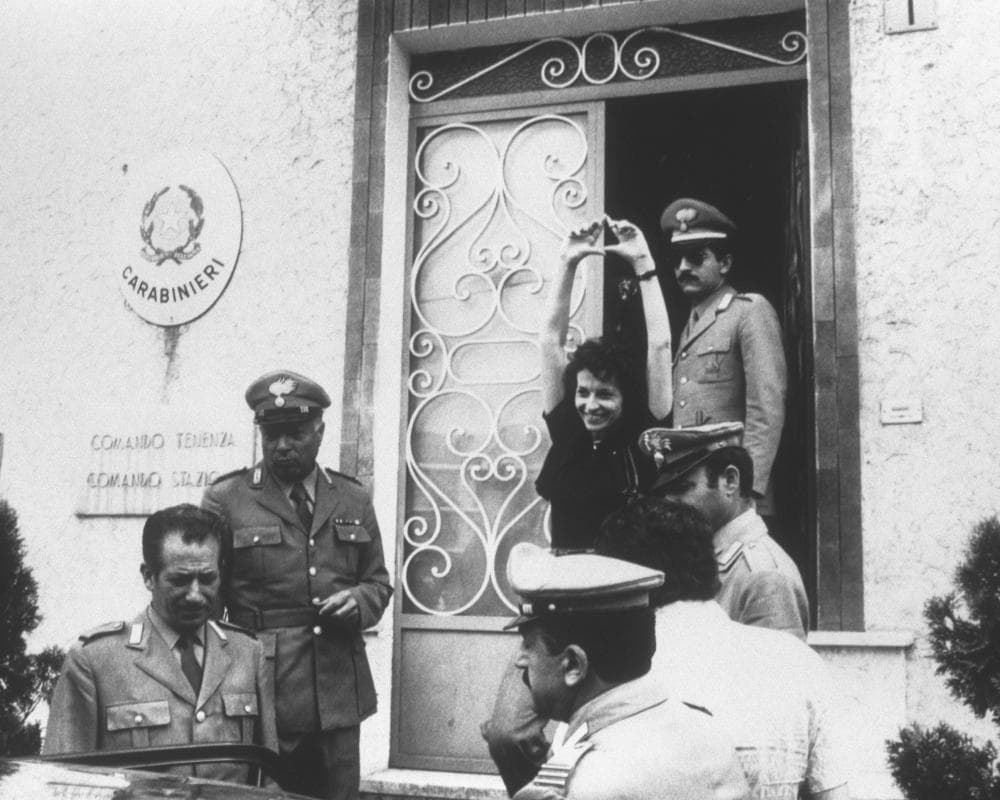
A magistrate in Florence issued an arrest warrant for her and others for the crime of “organising abortion”. In June 1975 she went to vote in regional elections in her home town of Bra, outside Turin. She asked the president of the polling station – who had once been her teacher – to have her arrested after voting. Outside the Carabinieri station, Bonino, smiling, held up her hands in the feminist “triangle” symbol. The crowd applauded. The photo made all the front pages.
Bonino said that she did not want any other woman to go through what she had. The press reported in 1976 that thousands of abortions had been arranged this way through the CISA networks – all of them classed as crimes. Bonino spent time in prison in the forbidding Le Murate complex in Florence. Along with the other militant prisoners, she asked not to be released.
Her imprisonment was a powerful political weapon. She was then released and in 1976 elected to the chamber of deputies for the Radical party. For complicated political and legal reasons, the whole process with regard to Bonino dragged on for years, right into the 1990s. She was never actually sent to trial, although others were, and were cleared, after decades.
At this time an extraordinary political movement emerged in Italy around civil and political rights and the growing feminist movement. The mechanism of the referendum had been inserted into the Italian constitution in 1948: a referendum to abrogate laws could be held if 500,000 signatures could be collected. Using this device as well as non-violent direct challenges to the law, the Radical party pushed for reforms that made divorce, abortion and contraception legal in just a few years.
These changes were confirmed through huge victories in referendums, which had come up against the full force of the Christian Democrat party and the Catholic church. Bonino was one of the key leaders of this movement.
Born in Bra, Emma was the daughter of Catterina (nee Barge) and Filippo Bonino, and grew up partly on a farm, something which she described later as “deeply boring”. She studied modern languages and literature at the elite Bocconi university in Milan (1967-72). Her thesis analysed Malcolm X’s autobiography – a sign of the times.
There were many facets to the 1968 movement, many of them interested in the use of violence, and calling for “revolution”. The Radical party, on the other hand, was deeply practical and also connected to the politics of personal life. It stood outside the major, more traditional and conservative parties on the left and the right, and was a natural ally of the feminist movement.
In the Radical party Bonino formed an unlikely partnership with the bear-like, charismatic, flamboyant and unpredictable leader Marco Pannella. However, the two later fell out and there was no rapprochement before Pannella’s death in 2016.
It was under the pressure of referendums in 1978 that two extraordinary reforms were passed in a short period of time. Italy’s infamously slow-moving political system had been forced into action.
First, in May that year, in response to the threat of a referendum, Law No 180 called for an alternative to psychiatric hospitals and led to an entirely new system of mental health care. Then the Law No 194 legalised abortion, and was confirmed with a huge vote after a referendum was organised by those opposed to it in 1981. The abortion law was by no means perfect – Bonino saw it very much as a compromise – but it has survived to this day.
Feminists and radicals also set up local health centres where women could go for advice around contraception and pregnancy. It was the victorious culmination of the campaigns that had seen Bonino’s arrest in 1975.
Bonino’s campaigns continued into parliament. In 1978 she called for the resignation of the Italian president, Giovanni Leone, after allegations of corruption appeared in a book by the journalist Camilla Cederna. Leone did resign. But in 1998 Bonino publicly apologised to him after many of the accusations proved to be unfounded.
The issue of miscarriages of justice became a central one for the Radicals, who took up the shocking case of the popular TV presenter Enzo Tortora, arrested in 1983 over false “supergrass” allegations that he was linked to drug trafficking and the Camorra. He was elected as a Radical party member of the European parliament in 1984, gaining immunity until his trial and sentence to 10 years’ imprisonment in 1985, overturned on appeal in 1987.
In 1994 Bonino and the Radicals backed Silvio Berlusconi’s first government, and her appointment as European Commissioner for four years from 1995 was seen as a quid pro quo for this support. For many on the left, this was a deep betrayal, and it blackened the reputation of the Radical party, which went through a bewildering number of name changes and alliance choices, confusing those who had seen Bonino as firmly part of the 70s movements for change.
In 1999 Bonino was a candidate for the presidency of the republic: in the event, Carlo Azeglio Ciampi was elected by parliament with a huge majority. However, her “Bonino list” surprisingly won more than 8% of the vote in that year’s European elections, electing seven MEPs, though this success was short-lived.
Bonino would later mark her distance from Berlusconi on a number of issues, and was made a minister for European affairs in Romano Prodi’s centre-left administration (2006-08), as well as holding the high-level institutional position of vice-president of the Senate. In 2013 she was briefly foreign minister in another centre-left administration.
An inspiration to many activists and feminists, Bonino was a pioneer for women in politics. When she was diagnosed with cancer in 2015 she often appeared with different and beautiful headscarves. She never spoke about her private life in any detail, although it later emerged that she had been entrusted with two young children for a time in the 70s. In interviews she told how difficult it was to “give back” these children to their natural families.
A convinced internationalist, Bonino was a strong believer in European identity and the EU. She took part in protests around – for example – genital mutilation and the war in Yugoslavia.
She was seized by the Taliban for a few hours in the 90s while campaigning for women’s rights in Afghanistan and moved to Cairo for a number of years in the 2000s. There she learned Arabic and campaigned, as ever, on civil rights. There was even an extraordinary and unlikely encounter with Pope Francis in her flat in Rome in 2024, with both in wheelchairs.
Never boring, always active, never free of deep contradictions, Bonino was one of the most exceptional political figures in postwar Italy. Her death has led to a huge debate in the country over her legacy, and the continuities and breaks between her activism in the 70s and her long political and institutional involvement.
She was certainly an inspiration for women both inside and outside the institutions, despite all the inconsistencies of her political career, which she finished as senator for Rome (2008-13 and 2018-22).
She is survived by her siblings Domenica and Giovanni.
• Emma Bonino, activist and politician, born 9 March 1948; died 11 September 2026