‘We have to end the melancholy’: the French leftwing MP intent on resisting the far right
Click any word to translate
Original article by Angelique Chrisafis in Sevran
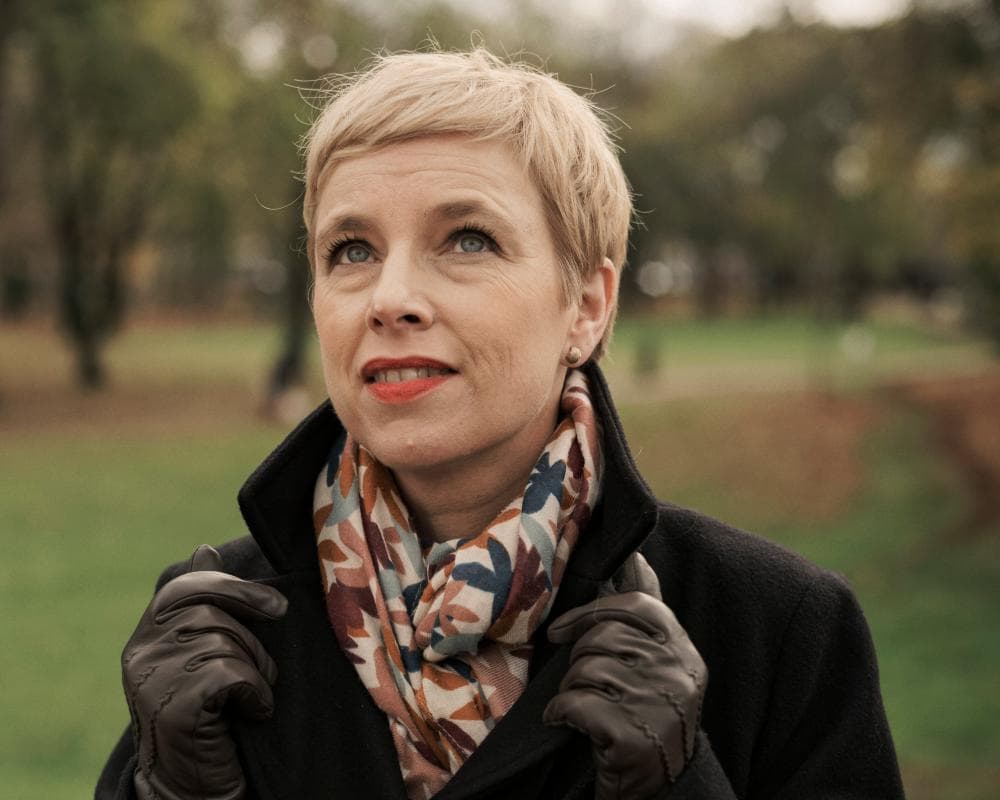
At a busy market in Sevran, a low-income suburb north of Paris, the local MP, Clémentine Autain, was shaking hands and posing for selfies, arguing that only a left alliance could stave off the threat of a French far-right president being elected in less than 18 months.
“The French far right is high in the polls and riding an international Trumpian wave,” said Autain, 52. “Without the left uniting behind a radical project, we can’t beat them.”
Autain, a regular face on TV whose Seine-Saint-Denis constituency in the suburbs of Paris is a leftwing stronghold, has announced she will run to be the presidential candidate for the left in a cross-party primary race next year.
Polling shows that Marine Le Pen’s anti-immigration, far-right National Rally is the closest it has ever been to winning the presidency. Whether its candidate in spring 2027 is Le Pen (which depends on a January appeal trial after her conviction for embezzling European parliament funds) or her protege Jordan Bardella, the party is gaining ground amid voters’ disillusionment with politics and anger at inequality, taxation and cuts to public services.
Autain said one elderly person had recently told her: “What this country needs is a French Donald Trump.”
But Autain’s conviction that the different parties on the French left – from radical left to centre – can overcome their policy disputes and personality clashes, take part in a joint primary race and unite behind one single presidential candidate in 2027 is seen by some critics as a remote dream.
Autain is known for her staunch leftwing policy, from higher taxes on billionaires to better funding for public services. She was one of a handful of MPs who were excluded last year from Jean-Luc Mélenchon’s leftwing party La France Insoumise after they questioned strategy and founded a new movement, L’Après (After), which now sits in parliament with the Greens.
She is also known for her unusual life story. At the age of 10, Autain sang Abba covers in a children’s pop group, and her memoir about the neglect she suffered from her alcoholic film star mother, Dominique Laffin, has been adapted into a hard-hitting film that opened in French cinemas this week.
Less well known is that Autain’s maternal grandfather, André Laffin, who died before she was born, was a far-right figure and one of the co-founders with Marine Le Pen’s father, Jean-Marie Le Pen, of a short-lived party in the early 1960s.
“My mother took the opposite political view to her father – she was steeped in 1968 as a feminist resolutely in search of freedom,” Autain said. “I didn’t know this grandfather who died before I was born, so I don’t have any feelings for him. But it’s clear his influence is unconsciously at play in my political project. It’s as if I intimately feel the reactionary attitude and authoritarianism of the far right and have an urgent need to fight them.”
Last June, the French left succeeded in putting aside its differences in record time to form a united front in Macron’s sudden snap parliament election. Voters rallied and Le Pen’s party was held back from taking parliament. But the hung parliament was split between three groups: the left, the far right and the centre.
Now Autain and several figures on the left want that alliance to reunite in a primary race to back one presidential candidate next year. The Green leader, Marine Tondelier, will run in the primary against Autain, as will the northern MP François Ruffin. And, underlining fears about the far right, the Socialist party will also take part.
But two key figures with presidential ambitions have refused: the veteran leftist Mélenchon, 74, who has run for president three times and believes his party is well placed for 2027, and the centre-left essayist and member of the European parliament Raphaël Glucksmann. Both could announce their bids early next year.
“We have to end the melancholy of the left,” Autain said, noting that the French left had failed to get through to the final round of the last two presidential elections when Emmanuel Macron, a centrist, twice beat Le Pen, with a shrinking margin. She feels that a united left candidate is the only way to make the final round. “The melancholy on the left is a form of nostalgia mixed with a spirit of defeat – an internalised sense that we’re all doomed so everybody might as well retreat to their own camp, rather than getting out there to form an alliance.”
For Autain, the personal is political. In cinemas this week the feature film Dites-lui que je l’aime (Tell Her That I Love Her) explores Autain’s experience growing up with her mother, who was found dead in the bath when she was 12. Autain appears in the film playing her adult self. Scenes reproducing her childhood show her left alone at night or trying to stop her mother smashing up a hotel bar because the bartender had stopped serving.
“It’s about how children construct themselves when they have a mother who’s unable to look after them,” she said. “It takes time to gain understanding, to see parents as people with their own suffering, stories and weaknesses … Everyone has something to settle with their parents – how to forgive and how to accept them. It’s universal.”
Autain said she “obsessively” created a life very different to her mother’s. She didn’t taste red wine until she was 30. “I still don’t drink beer because of the smell,” she said. “My mother drank beer in the mornings: we’d go from bar to bar and I had to wait beside her while she drank, so that smell of beer, I just can’t do it.”
Long before the #MeToo movement, Autain spoke publicly about surviving rape. In 1995, as a 22-year-old history student on her way to a lecture on the outskirts of Paris, she was grabbed at knifepoint in the street. She gave evidence and the serial rapist, who had attacked up to 30 women, was convicted. A few years into her political career, she went public. “It was important to me to speak out so others could also speak out,” she said. “I found it brutal as a rape victim, to see that women who spoke on TV about rape were pixelated … as if there was shame.”
Surviving rape led her to found a feminist organisation. She then built a career in leftwing politics and edited the magazine Regards.
She said polling showed that most French people backed the left’s ideas – investment in hospitals, fairer taxation of the very rich and multinationals – even if they didn’t vote left. “It’s that gap we have to bridge,” she said.
For Autain, tax justice is crucial. “We’re in a country that is passionate about equality,” she said. She and the MP Éva Sas were the first in parliament to table the “Zucman tax”, under which a 2% levy would be imposed on wealth above €100m (£88m). It was voted down by the senate but has stirred a national debate that continues.
Autain believes the French left must distance itself from the pro-business shift of the last Socialist president, François Hollande. “To win back people on the left, and the French people, we have to have a project that’s frank and offers a profound transformation which breaks with the misguided ways of social democracy in the second half of the 20th century,” she said. “And it must be able to unite because the splitting in three of the French political landscape [between left, centre and far right] is a major change.”