Loading...
Please wait for a bit
Please wait for a bit
Click any word to translate
Original article by Justin McCurry in Tokyo
A court in Japan has sentenced the assassin of former prime minister Shinzo Abe to life in prison – a case that shocked the public and exposed politicians’ ties to an influential religious group.
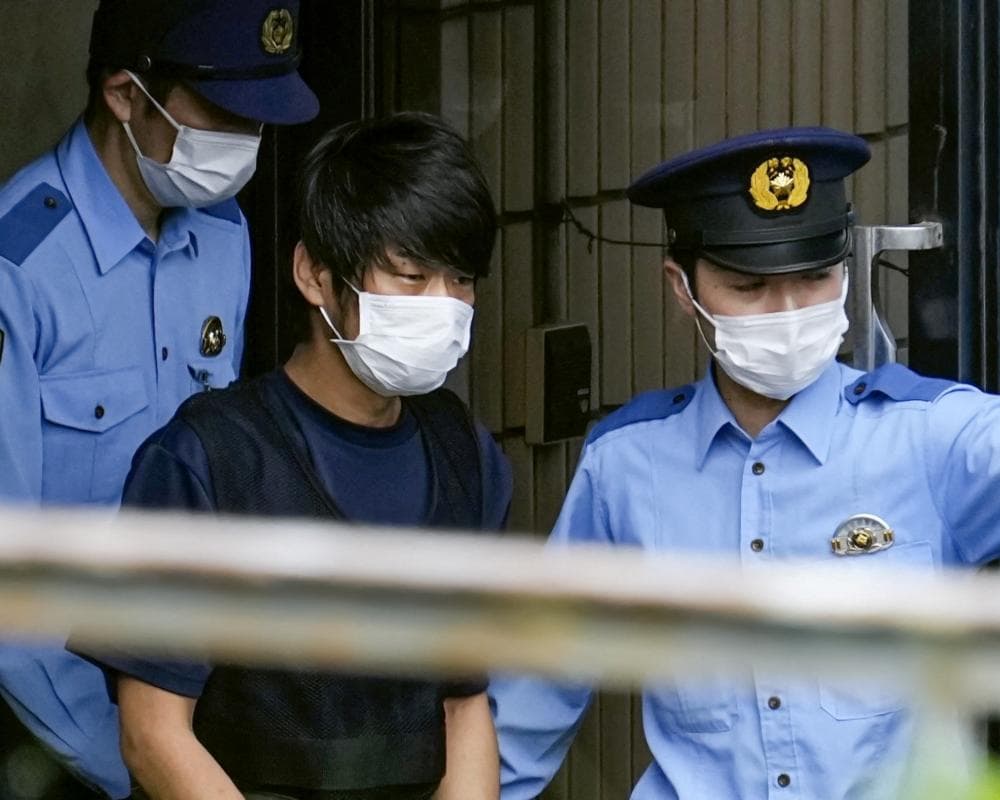
Tetsuya Yamagami, 45, had earlier pleaded guilty to killing Abe in July 2022 as he was making an election campaign speech in the western city of Nara.
Abe, Japan’s longest-serving prime minister who left a lasting influence on the country’s politics, died of injuries sustained after Yamagami shot him from behind with a homemade weapon.
Abe wasn’t the first Japanese politicians to have been killed in the postwar period, but his violent death in broad daylight on a suburban street sent shockwaves through a country where gun crime is almost unheard of.
Yamagami, who was wrestled to the ground by Abe’s security detail moments after the shooting, pleaded guilty when his trial started in October last year.
Describing the crime as “unprecedented in postwar history”, prosecutors had demanded a life sentence, but not the death penalty, which in Japan is usually reserved for multiple killings. Yamagami’s defence team had called for a prison term of no more than 20 years.
In Japan, life imprisonment leaves open the possibility of parole, although in reality, many inmates serving life die in prison, according to legal experts. Under the country’s legal system, a trial continues even when a defendant pleads guilty.
As controversial government plans were made to hold a state funeral for Abe, who resigned in 2020 after a second term in office, details emerged of Yamagami’s motive for targeting him.
The former member of the maritime self-defence forces told investigators the killing was revenge for Abe’s relationship with the Unification church – commonly known as the Moonies – which he blamed for plunging his family into poverty.
Yamagami’s mother, a church follower, had bankrupted the family with donations to the organisation, which was formed in South Korea in 1954 by Sun Myung Moon, a self-proclaimed messiah who preached new interpretations of the Bible and conservative values. Reports said that two decades ago she had donated more than ¥100m ($1m at the time) to the church’s coffers.
Abe, who had spoken at church-related events, was among a large number of Japanese politicians, mainly from the governing Liberal Democratic party (LDP), whose ties to the organisation were exposed during the investigation into his death.
The church, which critics describe as a cult, began exerting its influence on Japanese politics in the 1960s, forming alliances with conservatives, including Abe’s grandfather and postwar prime minister Nobusuke Kishi, who were sympathetic to its strong anti-communist message and opposition to trade unions.
Yamagami “thought if he killed someone as influential as former prime minister Abe, he could draw public attention to the church and fuel public criticism of it”, a prosecutor said earlier in the trial at Nara district court.
Yamagami said he had decided to kill Abe after seeing a video message the former leader sent to a group affiliated with the church. His aim, he said, had been to damage the church and expose its relationship with Abe.
Public anger over the revelations forced the party to distance itself from the organisation, while the church’s branch in Japan was later stripped of its tax-exempt religious status and ordered to dissolve.
Some members of the public were sympathetic to Yamagami, citing the damage his mother’s devotion to the church had caused his family. Yamagami was forced to give up higher education and in 2005, attempted to take his own life before his brother died by suicide.
His case drew attention to the plight of other children of Unification church followers in Japan, and led to the introduction of a law designed to protect people from “malicious” solicitations for money by religious and other groups.
Thousands of people signed a petition requesting leniency for Yamagami, and others sent care packages to his relatives and the detention centre where he was being housed.
Agencies contributed reporting.