Loading...
Please wait for a bit
Please wait for a bit
Click any word to translate
Original article by Leyland Cecco in Toronto and Thomas Graham in Tijuana
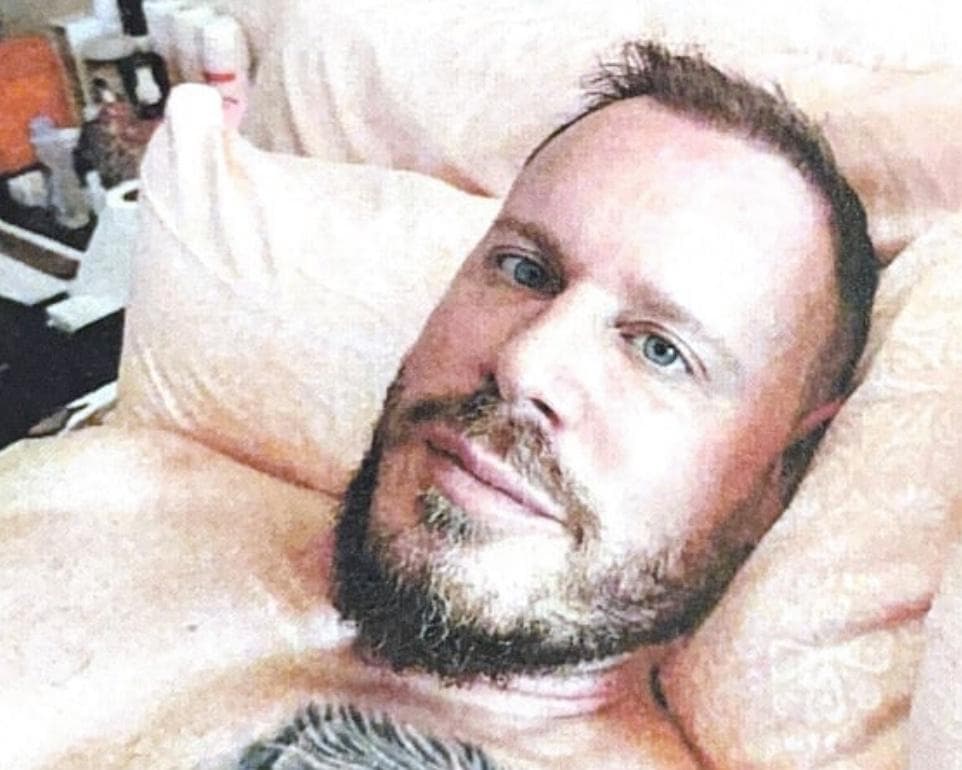
Ryan Wedding, the Canadian Olympic snowboarder turned alleged drug kingpin, has been arrested after turning himself in at the US embassy in Mexico, law enforcement officials announced on Friday.
Wedding, 44, had been sought by the FBI and the Royal Canadian Mounted Police (RCMP) for his role in overseeing what the US attorney general, Pam Bondi, called the “one of the most prolific and violent drug-trafficking organizations” in the world.
“He thought he could evade justice … here we are today, bringing him to justice,” the FBI director, Kash Patel, said from an airfield in California, calling Wedding the “largest narco-trafficker in modern times”.
Mexico’s security minister, Omar García Harfuch, said that Wedding “surrendered voluntarily” at the US embassy in Mexico City on Wednesday after evading police for nearly a decade.
Wedding was flown from Mexico to California and is custody. He is due to appear in court on Monday in California. He is charged with drug trafficking, conspiracy to murder, witness tampering and money laundering.
Officials in the US allege that Wedding’s organisation had moved nearly 60 metric tons of cocaine a year into Los Angeles from Mexico using a network of semitrucks. Wedding is also accused of ordering the killing of a key FBI witness as well as several other murders, including that of a couple who were killed in a case of mistaken identity.
Since 2023, the RCMP and the FBI have been collaborating on a sprawling investigation known as Operation Giant Slalom. In March, 2025, Wedding was added to the FBI’s Most Wanted List.
“We told you in November we would find Mr Wedding. Today, that day has arrived,” said Akil Davis, assistant director of the FBI’s Los Angeles field office. “The long arm of the law extends beyond our border.”
David said the arrest was a “good day” for victims. “Ryan Wedding tormented several people and several families that will never be the same,” he said. “But today, they get the justice that they sought.”
Davis said in addition to “crushing sanctions” against 19 people, including Wedding, authorities also seized a Mercedes sports car worth $15m and motorcycles worth $40m.
US authorities had previously said that they believed Wedding to be in hiding in Mexico. On Thursday, Patel was in Mexico City for what he called “pre-planned” meetings with the country’s security chief, García Harfuch. And on Friday morning he left with a souvenir: Ryan Wedding, and another, unnamed, “priority objective”.
The decision for an FBI director to be present in the field for an arrest is exceedingly rare and speaks to the political focus on capturing Wedding.
García Harfuch released a statement saying that Patel was leaving with “a non-US citizen who was arrested by Mexican authorities and is among the FBI’s 10 most wanted, and a Canadian citizen who voluntarily surrendered yesterday at the US embassy”.
“If it’s true that he handed himself in, this may be an attempt to negotiate better terms,” said Cecilia Farfán-Méndez, an analyst with the Global Initiative against Transnational Organised Crime. “Maybe it gives him a little more room for manoeuvre.”
Or there could be another explanation: he feared for his safety in Mexico, said Farfán-Méndez.
The arrest comes at a time of tension in North America, with Mark Carney and Donald Trump clashing at Davos, and renewed threats of US military strikes on Mexican cartel targets.
“There was a message from the secretary of state, talking about the need for tangible results [against organised crime],” said Farfán-Méndez. “I think grabbing Ryan Wedding is a very media-friendly way to show tangible results. I think it could be filed under that column.”
Alejandro Rosales Castillo, one of the FBI’s 10 most wanted fugitives, who is accused of the murder of a woman in North Carolina in 2016, was also arrested. A US citizen, he crossed the border to Mexico in 2017 and was in hiding for almost a decade until he was captured in Pachuca, Hidalgo, on 16 January.
NBC News first announced news of the arrest and US law enforcement officials familiar with the operation confirmed it to the Guardian.
In March, the FBI announced a $15m reward for the capture of Wedding, whose nicknames allegedly include “Public Enemy”, “El Jefe” and “Giant”.
At the time,Patel, compared Wedding to Pablo Escobar and Joaquín “El Chapo” Guzmán.
The head of the RCMP, Michael Duheme was also present at the announcement and said “no single country” can break up transnational drug-trafficking organizations.
Wedding was allegedly being protected by the Sinaloa cartel in Mexico while he was on the run.
Some analysts have suggested that Wedding’s significance in the international drug trade had been exaggerated by US authorities and the media.
“There’s been a high-level characterisation of Wedding as a major kingpin. There was a $15m reward for him. At least from a media standpoint, he was a big fish,” said Farfán-Méndez. “But I think the indictment gives a different sense of proportion.”
Though US authorities claim Wedding’s enterprise was trafficking 60 tonnes of cocaine a year, this figure does not appear in the indictment, which only mentions specific cases of a few hundred kilos being moved at a time.
“These arrests are important for law enforcement,” said Farfán-Méndez. “But whether they impact [drug] supply is another question.”