Loading...
Please wait for a bit
Please wait for a bit
Click any word to translate
Original article by Hannah Ellis-Petersen in Dubai and Shah Meer Baloch in Islamabad
Pakistan’s prime minister, Shehbaz Sharif, says his country is ready to “facilitate meaningful and conclusive talks” to end the war in the Middle East amid attempts to push Islamabad as a possible venue for negotiations between the US and Iran.
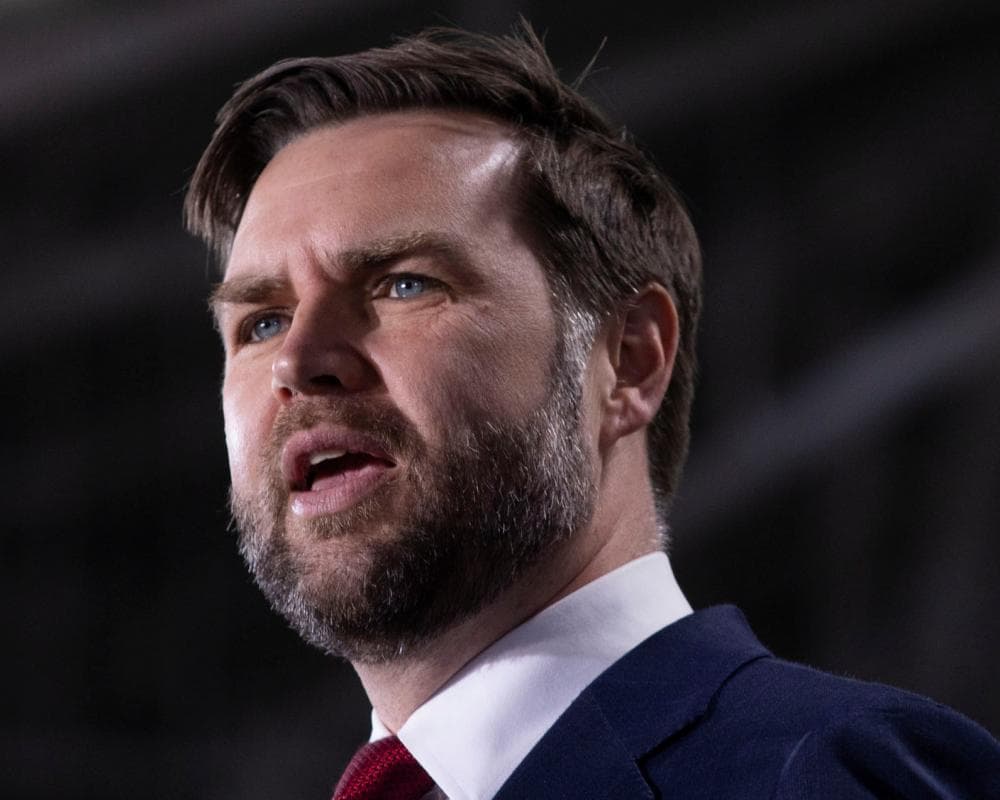
Pakistani sources said the US vice-president, JD Vance, was being put forward as a probable chief negotiator from the US side if talks went ahead. Iranian sources have said they would refuse to sit down with Trump’s Middle East envoy, Steve Witkoff, or Trump’s son-in-law Jared Kushner, who led the nuclear negotiations with Iran before the war.
Officials in Pakistan said the US and Iran could meet for negotiations in Islamabad as early as this week to discuss an end to the war, which began almost a month ago.
Sources said Iran’s parliamentary speaker, Mohammad Bagher Ghalibaf, was the most likely to lead any talks from the Iranian side. However, Ghalibaf has so far dismissed reports of talks between the two sides as “fake news”.
Pakistan’s military leadership has been attempting to take a leading role in brokering any peace talks. The White House confirmed that Pakistan’s army chief, Asim Munir, had a call with Donald Trump on Sunday to discuss the conflict.
Sharif then spoke to the Iranian president, Masoud Pezeshkian, on Monday, where they “agreed on the urgent need for de-escalation, dialogue and diplomacy”, according to an official read-out.
Islamabad has yet to be officially confirmed as the venue for any talks, which neither side has formally agreed to so far. Qatar, Turkey and Egypt have been touted as other venues, but sources said Tehran’s preference was Islamabad.
“Subject to concurrence by the US and Iran, Pakistan stands ready and honoured to be the host to facilitate meaningful and conclusive talks for a comprehensive settlement of the ongoing conflict,” said Sharif writing on X on Tuesday.
An Iranian diplomatic source confirmed that talks were expected this week but said that from the Iranian side there was “zero trust” in Washington and that they would not accept Witkoff and Kushner as negotiators for any discussions.
Negotiations over Iran’s nuclear programme were still taking place between the US and Iran when Trump began his bombing campaign. The Iranian regime has since viewed those negotiations, fronted by Witkoff and Kushner, as an attempt by the Trump administration to deceive Iran into thinking it wanted a diplomatic solution, while it planned to attack.
“With the previous negotiating team, there’s no chance,” said one diplomatic source. “The Iranian side regards the request for negotiations as another round of deception for the US-Israeli regime to find out a loophole to aggravate the strikes again.”
The source said the Iranian side viewed Vance as a more acceptable interlocutor. Vance is widely viewed as a sceptic of the decision to entangle the US in a Middle East war and has largely kept quiet on the conflict. “If the negotiations are going to have any outcome, JD Vance should join,” they said. “With Witkoff and Kushner, nothing will come out of it. We have seen that in the past.”
On Monday, Trump gave the strongest indication yet that he would be willing to halt US strikes, claiming that “strong talks” were being held between Iranian officials and Witkoff and Kushner. “We have had very, very strong talks. We’ll see where they lead. We have major points of agreement, I would say, almost all points of agreement,” Trump told reporters.
The US president has now given a five-day deadline to an ultimatum he gave over the weekend, threatening to “obliterate” Iran’s power plants and energy infrastructure if they did not reopen the strait of Hormuz, the crucial shipping route currently being blockaded by Iran’s military. Trump’s announcement of talks helped boost markets, bringing oil prices down sharply to below $100 (£75) a barrel, the lowest in days.
The Iranians have so far denied that any direct talks are taking place with the Trump administration, but said that “certain friendly states” had been conveying messages from the US regarding negotiations.
Diplomatic sources have said Pakistan, Oman, Turkey and Egypt have been among the countries communicating with US and Iranian officials in an attempt to bring hostilities to an end.
Pakistan’s powerful army chief enjoys a close relationship with Trump, whom he has visited twice in Washington, and has been described by the US president as my “favourite field marshal”. While Pakistan and Iran have complex ties, Pakistan is home to the second-largest population of Shia Muslims after Iran.
Pakistan also has a close relationship with the Gulf countries, which have born the brunt of Iran’s retaliatory strikes, and has a freshly signed defence pact with Saudi Arabia.
Pakistan is one of the south Asian countries already suffering from the severe economic fallout as a result of the war. Most of the country’s oil and gas comes through the strait of Hormuz and it has been facing costly shortages and fuel price rises.
Pakistani official sources said the Iranians had told them Islamabad was their preferred venue for talks.
The White House declined to comment directly on the reports of peace talks to be held in Islamabad. “These are sensitive diplomatic discussions and the United States will not negotiate through the news media,” said a spokesperson.