Loading...
Please wait for a bit
Please wait for a bit
Click any word to translate
Original article by Amarjit Chandan
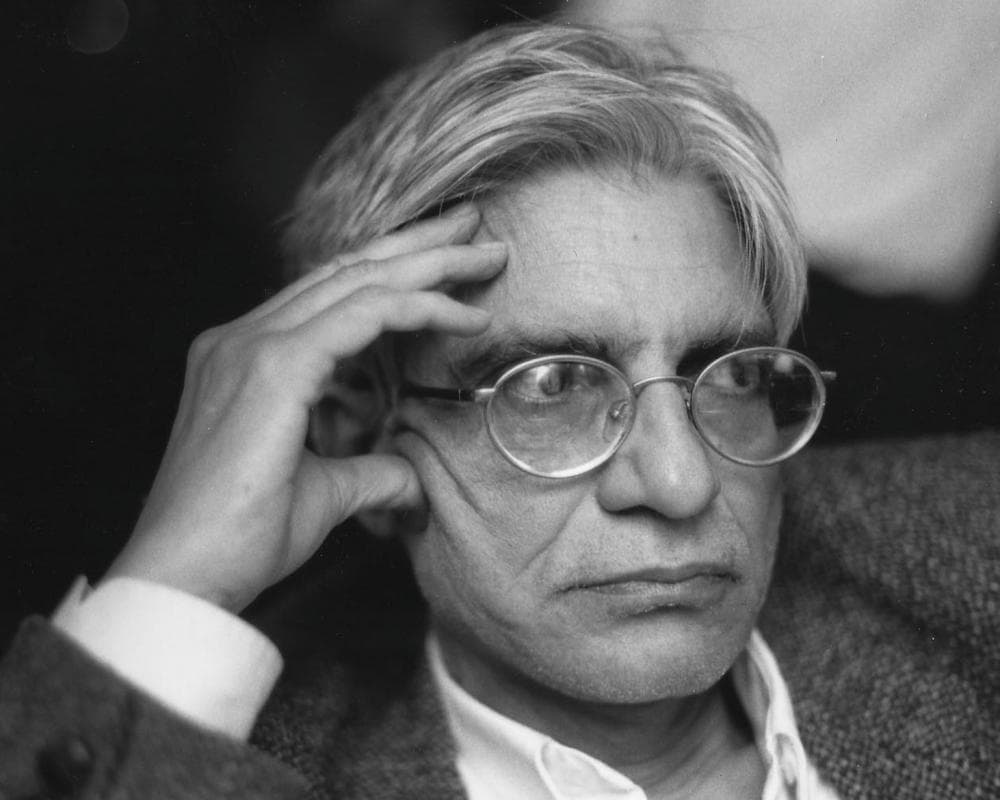
My friend Amin Mughal, who has died aged 91, was a Pakistani writer and critic living in exile in the UK, having been jailed for his political activities under the brutal regime of General Zia-ul-Haq.
In London he worked as a journalist and commentator on BBC World Service Urdu, and was editor of Awāz, an Urdu daily published in London. He also wrote for the weekly Pakistani English-language magazine Viewpoint, based in Lahore, and the Daily Jang, published in Urdu and English in Lahore and London.
His father, Mohammad Din, who served in the British Indian army in the first world war, ran a military hardware shop in Jabalpur, Madhya Pradesh, central India, until the partition of the country in 1947. His mother, Fazal Bibi, was a homemaker and avid reader of newspapers.
Following partition, the family settled in Kotli Loharan, in the Sialkot district of the Pakistani part of Punjab. There Amin was born, the youngest of five children, with a brother and three sisters. He went to the local high school and Murray college, then to Government College University Lahore for his BSc and a master’s in English.
In 1958, he was offered a lectureship at Government Islamia College in Lahore, where he taught English language and literature for 20 years. He was ousted from the college along with two communist colleagues, Manzoor Ahmed and Eric Cyprian, on charges of anti-Islamic activities, but the real issue for Amin was his trade union work – he had been secretary general of the West Pakistan College Teachers’ Association. The three of them founded Shah Husain college in 1970 and ran it until it was nationalised under Zulfikar Ali Bhutto two years later.
Amin was also a member of the National Awami party, becoming its secretary general in 1970 and deputised for Mazhar Ali Khan (the father of Tariq Ali) on the editorial team of Viewpoint, which was launched in 1975. He was imprisoned many times and under Gen Zia was sent to the notorious torture cells of Lahore Fort.
Arriving in London in 1984, Amin was in the forefront of the movement for the recognition of the Punjabi language in Pakistan. For public debate, he wrote tracts in Punjabi on classical Sufi poets such as Shah Husain, Wāris Shāh, and Bulleh Shah, and also translated into English works of some contemporary Punjabi poets, including me. We met for the first time during a demonstration outside the Pakistan high commission, London, in 1985. I come from the other side of the India-Pakistan border and Amin and I shared our personal and political histories – everything except our denominations.
He began working for the BBC and for Awāz in the 90s. For 20 years he did voluntary social service at his neighbourhood Royal Free hospital in Belsize Park. He also worked as a freelance translator and interpreter for the NHS and several local authorities in London.
A voracious reader and a keen observer, Amin was one of the most ardent thinkers from Pakistan. He jokingly called himself a “Marxist Muslim and Buddhist”, and was a father figure to the leftwing Punjabi community throughout the UK.
He is survived by 13 nephews and nieces.