Loading...
Please wait for a bit
Please wait for a bit
Click any word to translate
Original article by William Christou and Abbas Abdelkarim in Beirut
Rana Jaber told her husband that if God blessed them with a daughter, she would be named Narjis, Arabic for daffodil. After having twin boys, Jaber wanted a little girl she could dress up.
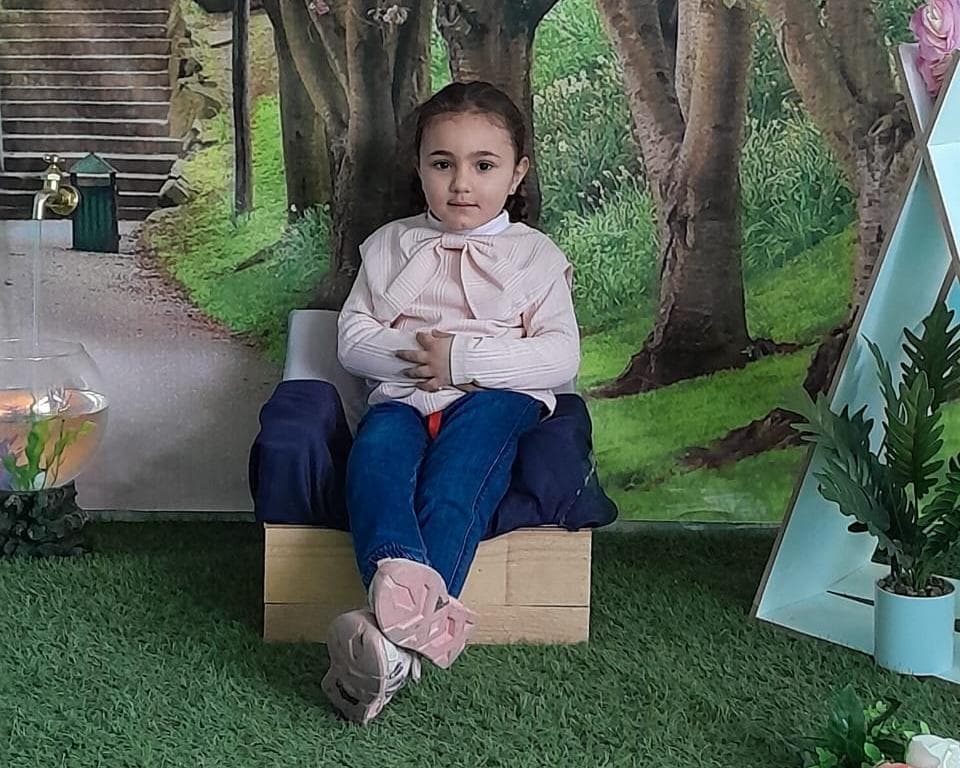
Jaber got her girl and made good on her promise: Narjis was born in 2020. Her mother was delighted to find that just like her namesake flower, her daughter’s hair was light. Narjis seemed “wise beyond her years”, Jaber said, recalling how her daughter would comfort her whenever she would cry.
As Jaber rushed to pack her daughter and two sons into the car on 2 March as she fled Israeli bombs, Narjis comforted her once again. “Mama, you’re my life. Don’t cry, I love you so much,” Narjis told her mother as stress began to overwhelm her.
It was one of the last things Jaber remembers her daughter saying. A few hours later, Israel dropped a bomb on their family home in Maifadoun, south Lebanon, killing six-year-old Narjis and her aunt.
“I keep replaying it. How our lives were torn apart. She was like a blossom. This girl … Oh my heart is breaking. I still can’t believe my daughter is gone,” Jaber said through sobs. The 34-year-old mother and her two 10-year-old sons, Abbas and Ali, were trapped under the rubble after the airstrike but survived with mild injuries.
Jaber has no shortage of pictures of her daughter: Narjis always has a wide smile, wearing the many dresses her parents bought for her, posing in her classroom with a papier-mache apple bearing a capital “A” held proudly in her hands. “She wanted to be a doctor,” Jaber said.
Narjis was one of the first children killed by Israeli strikes in Lebanon since the war began on 2 March after Hezbollah launched rockets at Israel, triggering an Israeli military campaign. Since then, 120 other children in Lebanon have been killed by Israel, nearly 10% of all deaths in the country.
Her death, three weeks later, has left Jaber’s family in shock. Jaber’s voice, already spoken at a whisper, begins to break as soon as she mentions her daughter’s name.
Abbas goes to the shop and wants to buy chocolates for his sister. His mother has to remind him that Narjis is gone; he starts to cry. Later, he will act as if she is coming back again.
“Their behaviour has changed. They do strange things now. My sons weren’t like this before. Now if he hears a loud noise, he panics and starts shaking, crying,” Jaber said.
Other families have no members left to mourn the dead children. All six members of the Basma family – mother, father and four children – were killed in an airstrike on their home in Nabatieh on 14 March.
“They were a poor family, it’s sad. I told them to flee, but they said they didn’t have the money. As soon as I heard there was an airstrike on the neighbourhood, I called [the father]. But he didn’t pick up,” said Hussein Youssef, a neighbour and close friend of the family.
The family had fled during the last Hezbollah-Israel war in 2024, but this time the father, who worked as a painter, could not afford a prolonged displacement.
“They were very kind, quiet, peaceful children. They were all very social kids in the neighbourhood, they brought life to the whole area,” said Youssef.
The death of the family deeply upset Youssef’s own children, who were very close to the family. They did not expect to lose their classmates so suddenly.
“My son cried a lot. He and his friends keep posting their photos and talking about them all the time,” Youssef said. “He was especially affected by the death of the little girl: she used to jump on him and play with him. The little girl really broke his heart.”
Children growing up in Lebanon have experienced two wars in just a three-year time span. Israeli bombing, while primarily targeting south Lebanon, has touched virtually all parts of the country, shattering a sense of safety for children.
Experts say exposure to violence in children can lead to developmental and antisocial behavioural issues later in life. The longer the conflict goes on, the more severe and long lasting the symptoms.
“Children wake in fear, parents carry unbearable worry, and the hurt will echo for years, if not generations, after the bombs fall silent,” said Dr Rabih El Chammay, the head of the national mental health programme at the Lebanese ministry of public health.
Jaber said she would seek psychological treatment for her two sons as soon as the war ended, and she was deeply worried about the long-term trauma the bombing will have on them.
Until then, she and the rest of the family are left to deal with the immense weight of Narjis’s absence by themselves.
“She was different from all the other children. She would tell me: ‘Mama, I want to sleep next to you. I want to sleep in your heart,” Jaber said, crying. “She was incredibly kind, gentle. More than I can describe.”