After more than a decade of tragedy, Christchurch emerges as New Zealand’s most ‘vibrant city’
Click any word to translate
Original article by Kiran Dass in Christchurch
From 2010, New Zealand’s second-largest city, Christchurch, became inextricably linked with crises. The city, which had been known for its gardens, gothic architecture and monochromatic culture was rocked by a decade of tragedy – devastating and fatal earthquakes, wildfires and a terrorist attack on two mosques that killed more than 50 people.
But in recent years, the city of crises has taken a surprising turn – shrugging off its once-conservative reputation and rebuilding from tragedy to become one of New Zealand’s most appealing cities.
Christchurch is now at the centre of the country’s fastest-growing region as people from the North Island and further afield flock to the revitalised city. Business growth outpaces the national average and the cultural scene is thriving, as experts say affordability and job prospects entice people to the city.
Christchurch mayor Phil Mauger claims the city is “the capital of cool”.
“We’ve been named New Zealand’s most vibrant city as well as ranking highest in the 2024 Happy City Index,” he says, citing affordability and quality of life as key attractions.
The shift in Christchurch’s desirability would have been difficult to imagine just over a decade ago.
In February 2011, a 6.3-magnitude earthquake struck Christchurch, killing 185 people, disrupting tens of thousands of lives and reducing 80% of the city centre to rubble. Tens of thousands of people left the city following the quakes.
In 2017, destructive fires in the Port Hills, claimed one life, razed homes and forced more than 1,000 people to evacuate. Then, two years later, the world looked on in horror as news broke that a white supremacist terrorist had gunned down more than 50 Muslim worshipers at two of the city’s mosques. In the wake of those attacks, attention turned towards how Christchurch could have become the target of such terror.
“When the ground literally shifted beneath us, when hatred struck at the heart of our community, and when our Port Hills caught on fire, we chose … unity and hope to see us through,” says Mauger.
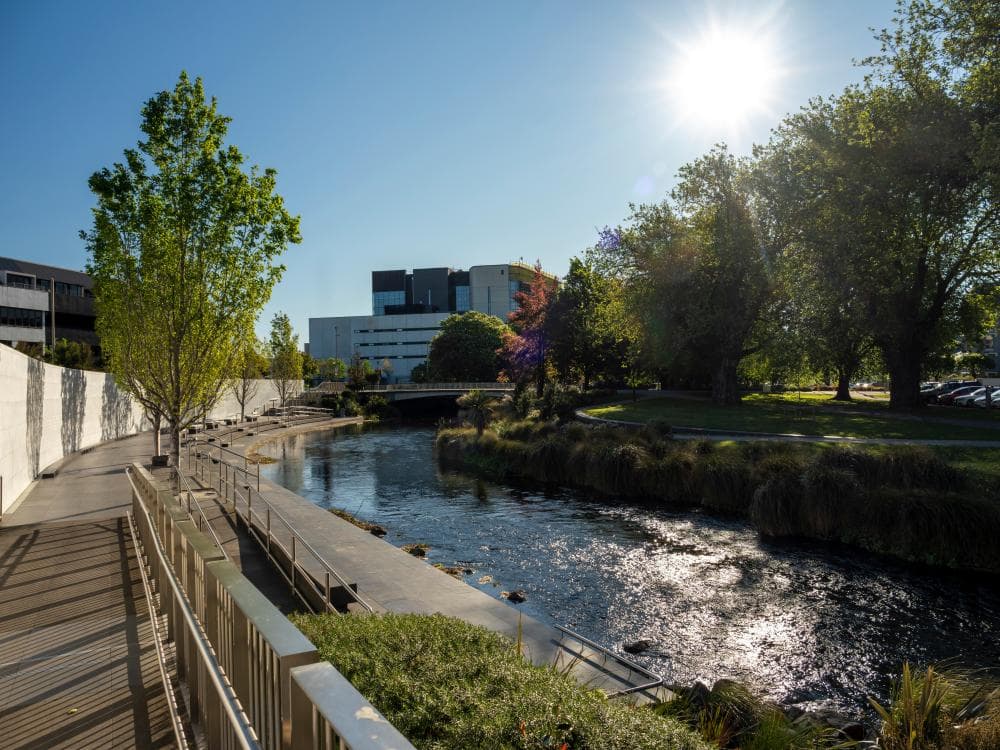
Resilience and a slow but measured post-earthquake rebuild has transformed the city. New buildings have sprung up, there are splashes of colourful street art everywhere and striking public artworks are dotted around the city.
“The community is at the heart of everything we do. Amazing things can be born out of disaster when a community refuses to be defined by such devastating events,” says Mauger.
‘I was struggling in Auckland’
Provisional data from Stats NZ released in October shows Canterbury’s population grew by 1.1%, the result of Christchurch’s provisional net migration gain of 5,300. The average house value in Christchurch is around NZ$751,000 ($439,000), compared with about NZ$1.2m in Auckland.
Musician Amelia Murray says when she saw the price of a Christchurch house on a social media listing, her “jaw dropped”. She moved to the city from Auckland in 2022.
“I could actually afford to buy a house in Christchurch,” Murray says. “I was struggling to live in Auckland while trying to do my art. I just felt like I was battling the city, it was draining me.”
Murray, who performs as Fazerdaze, has seen her career accelerate since moving to the city. Her record Soft Power just won album of the year at the Aotearoa Music Awards, where she was also named best solo artist.
She says as a single woman and an artist, being able to afford her own home has given her “a sense of dignity and pride”.
Still, some costs are higher. Christchurch residential rates are generally above those in Auckland and Wellington as the city continues to undergo post-earthquake recovery. Murray says the money appears to be translating into infrastructure.
“I’m happy to pay my rates. The gardens and cycle tracks are so well-maintained, I love Tūranga [the library] and the outdoor facilities. I’m so much more outdoorsy here than I was in Auckland.”
Chief executive of ChristchurchNZ, Ali Adams, describes Christchurch as a “Goldilocks city”, saying: “It’s 20 minutes to get anywhere, it’s big enough for global business and small enough to have a career and balanced lifestyle.”
Data from ChristchurchNZ shows in the year to August 2025, the number of business locations in Canterbury increased 2.4%, more than double the rate of national business growth and the highest in the country, it said.
Among the new business owners is Liam Kelleher, who grew up in Christchurch. He recently returned to his home town after from living in London where he worked in the wine sector. Kelleher opened Christchurch’s first urban cidery and restaurant, Lillies, last year with co-owner Will Lyons-Bowman.
Despite the nationwide cost of living crisis, he says the venture didn’t feel like a risk as “Christchurch was ready for something a bit different.”
In May, The Press reported Christchurch’s 15-24-year-old population has increased by 6%, and that the University of Canterbury Te Whare Wānanga o Waitaha has the second-fastest university growth in the country.
Adams says she’s seeing growth in industries like health tech and aerospace, and that is attracting younger people to Christchurch. “They want to do work that makes change in the world,” says Adams.
Mauger is hopeful that Christchurch can also become a draw for sporting and events, with the NZ$683m One New Zealand Stadium at Te Kaha due to open in the city centre in 2026. The biggest indoor sports and aquatics facility in the country, the NZ$300m Parakiore Recreation and Sports Centre, opens in December.
But he says it’s “not just about bricks and mortar”.
“The city’s resurgence has been built on the courage, compassion [of] … its people. From tragedy has come positivity and resilience,” Mauger says.