Loading...
Please wait for a bit
Please wait for a bit
Click any word to translate
Original article by Justin McCurry in Tokyo
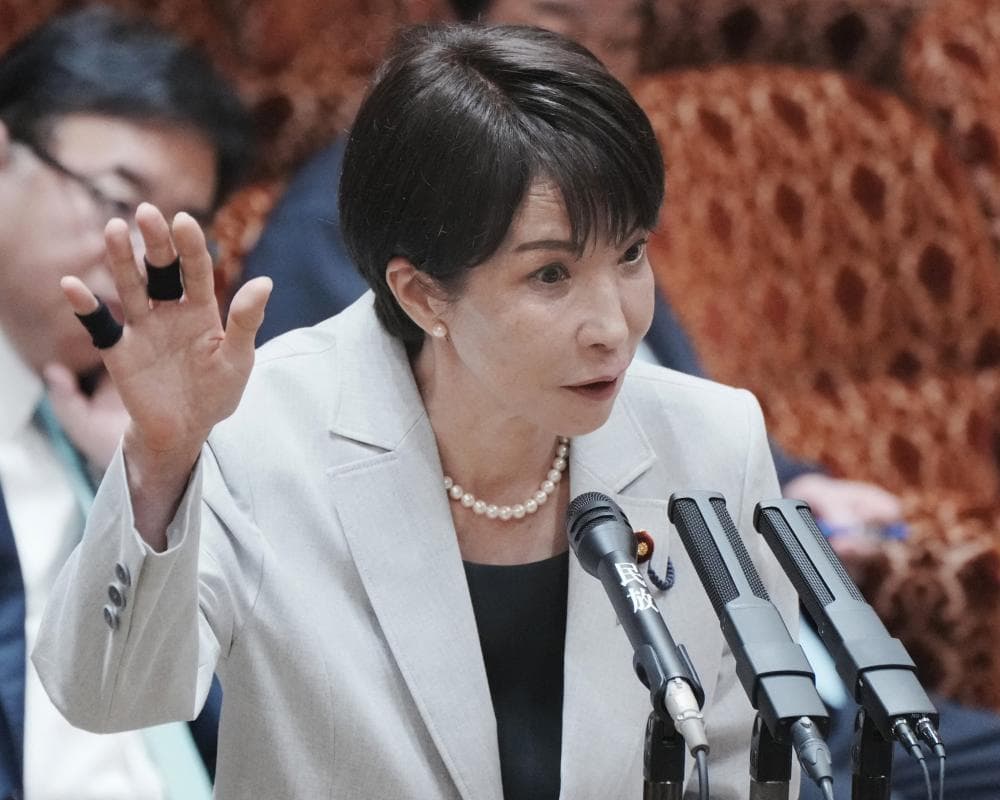
Japan will release additional oil reserves early next month, the prime minister, Sanae Takaichi, said on Friday, as concern grows over energy shortages caused by the crisis in the Middle East.
It will be the second time that Japan, which is heavily dependent on Middle East oil, has dipped into its strategic reserves since the US-Israel war on Iran started in February.
Last month Takaichi approved the release of 50 days’ worth of oil – the government’s biggest ever release – as the government attempted to head off a spike in prices.
“To ensure the stable supply of crude oil, we will release starting in early May the equivalent of roughly 20 days’ worth [of oil] from the national reserves,” she said at a ministerial meeting held to discuss the conflict.
Japan has enough oil in reserve to last 230 days, but it is also imports 95% of its crude oil from Middle East, most of which is transported through the strait of Hormuz.
Most of Japan’s reserves – 143 days’ worth – are state owned, with the remainder belonging to the private sector and oil-producing countries in the Gulf.
Japan is also trying to secure oil from locations that do not ship via the strait of Hormuz, amid uncertainty over whether the waterway will fully reopen after a two-week conditional ceasefire announced by Donald Trump this week.
By May, Japan should be able to secure more than half of oil imports via other routes, Takaichi said, although she did not provide details.
The industry ministry has said that potential new sources for imports could include Yanbu on Saudi Arabia’s Red Sea coast and the Port of Fujairah in the United Arab Emirates. Japan has also contacted suppliers in the US and Malaysia, as well as countries in central Asia, Latin America and Africa.
The government has asked domestic suppliers to prioritise sales of stockpiled fuel to certain sectors of the economy, including healthcare, transportation and agriculture, Takaichi said.
The decision to tap into oil reserves for a second time came as pressure grew on Japan’s government to resist US pressure to become militarily involved in the conflict.
More than 100 demonstrations were held across the country on Wednesday, with protesters urging Takaichi, a conservative, to abide by the postwar constitution, which forbids Japan from using the threat or use of force as a means of settling international disputes.
An estimated 30,000 demonstrators rallied outside the National Diet building, many of them waving light sticks and carrying banners in support of the war-renouncing article 9 of the constitution.
Fears that Takaichi could use her party’s huge majority in the lower house of parliament to push for constitutional reform have strengthened since the start of the war.
Last month, she turned down a request by Trump to send Japanese Maritime Self-Defence Forces to the strait of Hormuz, telling him that any military involvement could violate the constitution.
Trump has since criticised Japan and Washington’s other north-east Asian ally South Korea for staying out of the conflict.
After singling out Nato countries, Australia and South Korea for not joining the war, Trump directed his frustration towards Japan. “You know who else didn’t help us?” he said during a press conference on Monday. “Japan. We’ve got 50,000 soldiers in Japan to protect them from North Korea.”
Setsuko Sasaki, a protester in Tokyo who was attending her first demonstration, said: “It is always ordinary civilians who suffer in wars, so I decided to come here to make my voice heard. I knew I would regret it if I did nothing.”
Agencies contributed reporting.