Loading...
Please wait for a bit
Please wait for a bit
Click any word to translate
Bird enthusiast Jean Turner hoped avian flu would never arrive at her doorstep.
At her home on Kangaroo Island in South Australia, bossy fairy wrens chirp at her from the deck, grey currawongs clumsily fall into her bird bath, and fluffy, hooded plover chicks emerge from speckled eggs in front of her binoculars.
But online, images of Argentinian coastlines strewn with dead seal pups and researchers lining up rows of dead seabirds on Antarctic islands offered a warning of what could come.
So when SA confirmed its first case of the deadly H5 bird flu strain, just over 200km away at Robe on the Limestone Coast, Turner was prepared to become a different kind of birder.
“We had this fairytale belief that maybe we wouldn’t get it here,” she says.
“But it’s here and now things are going to get harder and more confronting.”
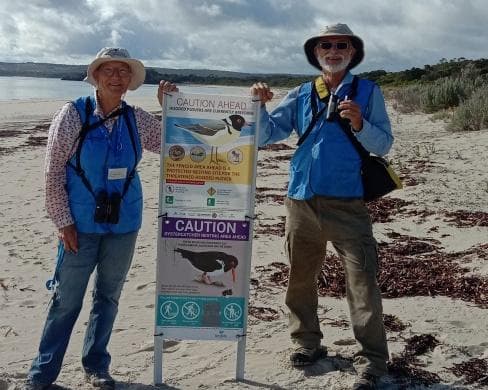
She is one of more than 120 volunteers who have signed up for the Bird Observers Network, which allows birders to contribute to the state’s bird flu response.
The partnership between the SA government, Conservation Council SA, Birds SA and Birdlife Australia trains volunteers to identify and report sick birds that may be showing signs associated with H5 bird flu.
Since the network’s first session, Turner has already reported a sick greater crested tern, which was resting at the edge of a flock.
While the other birds shuffled or flew around as she tried to get a better look, the sick animal did not respond.
“It was standing on the jetty, trembling and swaying a bit,” Turner says.
“It didn’t look well, it just looked really miserable.”
Compared with the non-bird-obsessed general public, birders can offer greater detail when reporting potentially infected birds, says Steven Langley, the president of Birds SA.
Sign up for the Breaking News Australia emailThey can often recognise species more accurately, use their binoculars to observe possible abnormalities within a flock, and notice when birds they might see on their routine walks go missing.
“We all just want to be able to do whatever we can to make a difference,” Langley says.
“When you see these distressing images from overseas, you’re implanting them into your mind and on to the places and the birds that you have got a great deal of affection for.”
Volunteers generally don’t receive further correspondence after they have made a submission but multiple crested terns found on Kangaroo Island have been tested and returned confirmed positive results for H5 bird flu since Turner’s report.
The grim task of reporting dead wildlife is a familiar one to many SA birders after the toxic algal bloom which engulfed 20,000 sq km of coast, killing millions of sea creatures and becoming one of the worst marine mass mortalities in the world.
Though Turner says the scenes from the bloom were confronting, she worries bird flu has the potential to be even worse.
The first mass mortality event of the outbreak was detected last week among greater created terns at Baudin Rocks, just across the beach from Robe, where more than 80 dead and sick birds were spotted.
Langley says the impending disaster makes it even more important to take other actions to protect birds, including mitigating predator risks, reducing disturbance and providing and protecting more habitat.
“When you lose a huge proportion of your breeding birds to bird flu, every single bird that survives is really, really valuable,” he says.
“We need to be reducing disturbance to these birds.”
For now, the SA government says it is continuing engagement with the community, the agricultural industry and the wildlife sector to bolster surveillance.
The environment minister, Emily Bourke, thanked the birding community for helping with surveillance and says other states and territories were interested in setting up similar models.
Birders and the general public who come across dead or sick animals have been urged not to touch them but instead to report them to the Emergency Animal Disease Hotline on on 1800 675 888, and by taking a photo and noting the location.