‘She’s not afraid of anyone’: the prison writings of one of Hong Kong’s last outspoken democracy activists
Click any word to translate
Original article by Amy Hawkins in Beijing
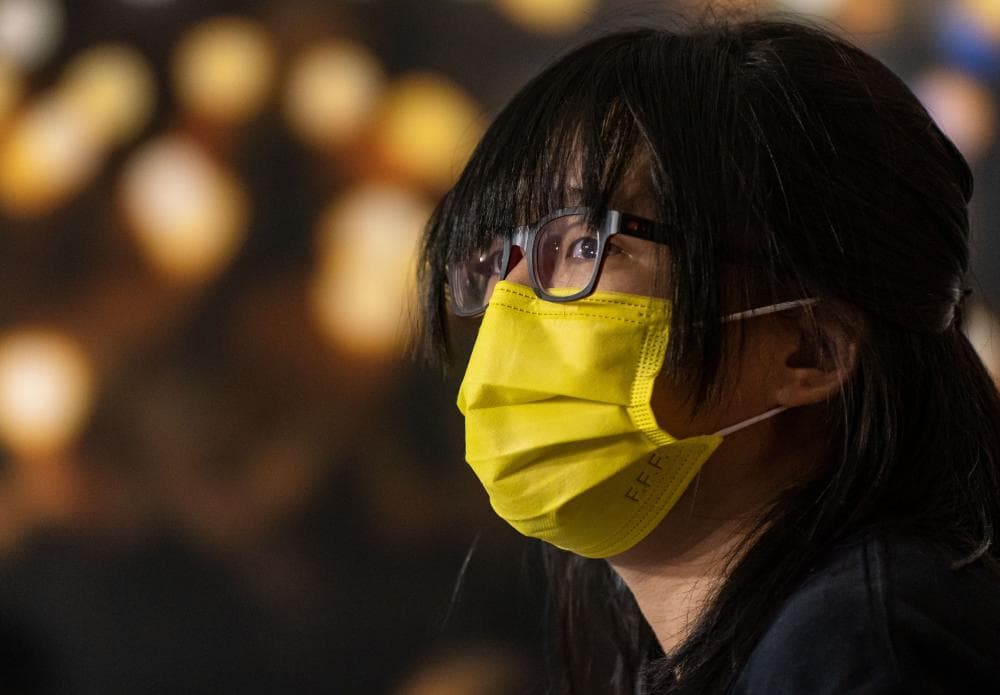
In one essay written from prison, Chow Hang-tung worries about her hairstyle before court appearances because there are no combs or mirrors in her cell.
“In a place like prison, where anything that is personal is stripped away, it’s even more important to hold on to every means by which you can express yourself,” she writes. “Don’t let uniform, depersonalised rules, dress codes, schedules, and behavioural requirements grind down your edges and mould you into a ‘model citizen’”.
The vignette is everyday, almost mundane. It stands in contrast to Chow’s position as one of Hong Kong’s most outspoken dissidents, one who has been detained for nearly five years awaiting trial over her role in organising an annual vigil marking the Tiananmen Square massacre.
Her case represents one of the last high-profile national security trials to be heard in Hong Kong, as the national security law imposed by Beijing in 2020 extinguishes what was once one of the world’s most widely watched pro-democracy struggles.
On Friday, Chow and her co-defendant Lee Cheuk-yan were found guilty of “incitement to subversion” by a Hong Kong court. They face a maximum penalty of 10 years in jail when they are sentenced later in the year.
As the years pass by, the 41-year-old barrister has written screeds from behind bars on everything from the meaning of freedom to the legacy of the 1989 massacre, some of which have been translated by Brian Kern, a writer and human rights activist. Chow’s profile has only grown since she has been detained. She has won several human rights awards, and her social media profiles, which are managed on her behalf, are regularly updated with her writings from prison.
In another essay, she describes being handed a white Mickey Mouse t-shirt to wear in court because she is not allowed to wear clothing that carries the branding of her protest group, the Hong Kong Alliance.
“The Mickey Mouse t-shirt may seem innocent on the surface, but isn’t it still a prison uniform provided by the correctional facility? Even before the Alliance has been convicted, its clothes have already become contraband,” she writes.
While some writings are breezy and irreverent, many are deeply considered essays on defending civil rights in the face of a powerful and oppressive Chinese Communist party. As a highly regarded barrister who has been representing herself in court, she also dives into legal philosophy.
“She’s not afraid of anything or anyone,” said Kevin Yam, a Hong Kong lawyer who now lives in exile. “For a lot of us who are outside Hong Kong now and sometimes feel a bit dispirited by things, her example and her inspiration is a big factor in us not losing hope and keeping our spirits up.”
Wu Yangwei, Chow’s fiance, a Chinese activist better known by his pen name, Ye Du, said it was Chow’s interest in mainland Chinese struggles that first attracted him to her. “From the moment I met her… I felt that she was incredibly innocent, deeply compassionate, and deeply empathetic toward China’s democracy and human rights defense movements,” Wu said. He now lives under close police surveillance in Guangdong province.
‘A society that loses freedom of speech … loses its very soul’
Chow was arrested in September 2021 along with two other organisers of the now disbanded Hong Kong Alliance in Support of Democratic Movements of China.
The Hong Kong Alliance’s annual Tiananmen vigil, which attracted tens of thousands of Hongkongers each year, was banned in 2020 on the grounds of pandemic control.
Chow, along with Lee Cheuk-yan and Albert Ho, were charged with incitement to subversion under Hong Kong’s new sweeping national security law. Chow and Lee pleaded not guilty in their trial, which ended on 19 May, while Ho submitted a guilty plea, which could help him get a sentence reduction. All three have already served shorter sentences for other convictions relating to the vigil.
A Hong Kong government spokesperson said Lee and Chow were prosecuted “because they have overstepped the boundaries of lawful conduct by committing a criminal act of inciting subversion.” The spokesperson said law enforcement actions paid “no regard to their political stance, background or occupation.”
In an essay written this year for the 37th anniversary of the Tiananmen Square massacre, Chow wrote: “A society that loses its freedom of speech never just loses a few articles or events – it loses its very soul”.
“‘Power corrupts’ is a hackneyed phrase, but when the will to power permeates everything … the decline of society becomes inevitable. Conversely, resisting the encroachment of power, or even attempting to put it back in its cage, requires a steadfast return to fundamental human values.”
From studying earthquakes to fighting for human rights
Chow came late to the law. A straight-A student, she had originally gone to Cambridge University to study natural sciences, specialising in seismology. In 2008, a massive earthquake struck Sichuan province, killing 70,000 people. Chow travelled to the region to volunteer as a rescue worker. Friends of Chow said the experience had a profound impact on her. She believed that the failure of the Chinese government to adequately prepare for the natural disaster, and the handling of the aftermath, increased the death toll, said the friends.
Chow dropped out of her PhD programme and returned to Hong Kong to retrain as a barrister. She threw herself into Hong Kong’s then vibrant civil society, volunteering for human rights groups alongside her studies. It was while preparing a bail application for a fellow pro-democracy activist, Gwyneth Ho, that Chow was arrested in September 2021.
“She’s turned her scientific training to the Communist party, dissecting the party’s manoeuvres as clinically as she once looked at tectonic plates and seismic movements,” said Mark Clifford, the president of the Committee for Freedom in Hong Kong Foundation.
Since Chow has been in jail, her fiance Wu has communicated with her by letter, and occasionally through letters published in the newspaper Ming Pao, which is available in prison. In January last year, their correspondence was cut off, Wu said. “It’s even worse than mainland China. In mainland prisons, political prisoners can still communicate with family, but Hong Kong prisons now block even that,” he said.
Hong Kong’s correctional services department said that all prisoners, including Chow, can send and receive letters “subject to the requirements of the prison rules”. The department said Wu’s claim was “totally false and misleading”.
Wu said that Chow’s letters are “full of fighting spirit”. “I am not worried about her,” he said.
As far back as 2021, Chow published an essay about her refusal to plead guilty, writing: “A stubborn freak like me can only march on and fight my case till the end … Having a chance to exhaust oneself is better than living a purposeless life, isn’t it?”