Loading...
Please wait for a bit
Please wait for a bit
Click any word to translate
Original article by Carlos Mureithi in Nairobi, Eromo Egbejule in Katsina, Nigeria, and agencies
More than 160 people have been killed in two villages in western Nigeria in the country’s deadliest armed assaults this year, as communities reel from repeated and widespread acts of violence perpetrated by jihadists and other armed groups.
The death toll from Tuesday’s attacks in Woro and Nuku in Kwara state stood at 162 on Wednesday afternoon, according to Mohammed Omar Bio, a member of parliament representing the area.
He told the Associated Press that the Lakurawa, an armed group affiliated with Islamic State, had carried out the attacks. No one has claimed responsibility.
Sa’idu Baba Ahmed, a politician in the Kaiama region, said gunmen had rounded up residents, bound their hands behind their backs and killed them. The attackers also torched homes and shops. “As I’m speaking to you now, I’m in the village along with military personnel, sorting dead bodies and combing the surrounding areas for more,” he told Reuters.
He said many people had fled into surrounding bushland with gunshot wounds and that the whereabouts of several people, including the village’s traditional king, were unknown.
Residents told Reuters the gunmen were jihadists who often preached in the village and that they demanded that locals ditch their allegiance to the Nigerian state and switch to sharia law. When the villagers pushed back, the militants opened fire during Tuesday’s sermon, they said.
The Kwara state governor, AbdulRahman AbdulRazaq, condemned the attack as “a cowardly expression of frustration by terrorist cells following the ongoing counter-terrorism campaigns in parts of the state”.
Kwara borders Niger state, which is targeted increasingly by armed groups. The military recently carried out operations in the area against what it called “terrorist elements”.
Nigeria is in the grip of interlinked security crises, including a jihadist insurgency in the north-east and north-west, a surge in looting and kidnapping for ransom by armed groups known as “bandits” in the north-west and north-central regions, and intercommunal violence in central states.
At least two groups operating in the country are affiliated with IS: an offshoot of the Boko Haram extremist group known as Islamic State West Africa Province in the north-east, and the lesser-known Islamic State Sahel Province, known locally as the Lakurawa, which is prominent in the north-west.
The military has said in the past that the Lakurawa has its roots in neighbouring Niger and that it became more active in Nigeria’s border communities since a 2023 military coup.
In a separate attack on Tuesday, gunmen killed at least 13 people in Doma village in the Faskari area in Katsina state in the north-west, police said on Wednesday. Last week, armed extremists in the north-east killed at least 36 people during separate attacks on a construction site and on an army base.
Tuesday’s attack in Katsina state happened despite a series of peace deals brokered between armed groups of motorcycle-riding bandits and villagers in the 11 local government councils most affected by the violence in the state. The deals were negotiated by community elders and traditional rulers and reportedly backed by local authorities. Faskari, a predominantly farming and animal husbandry area, was one of those councils.
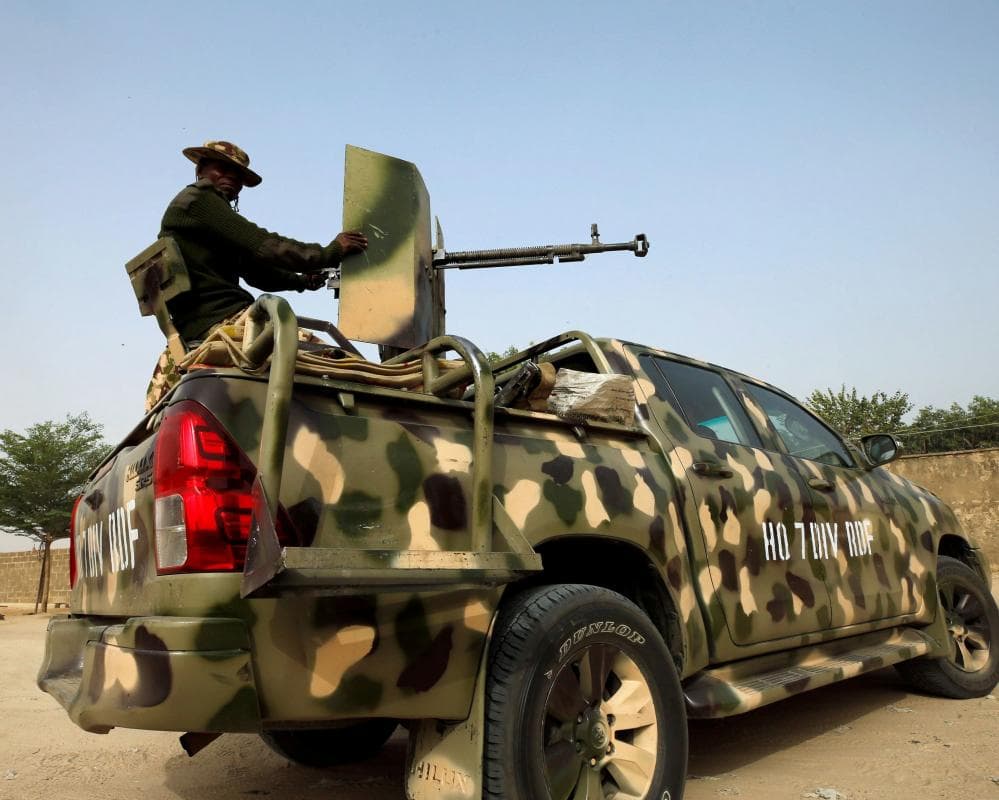
The Nigerian military has intensified operations against jihadists and armed bandits and regularly claims to have killed huge numbers of fighters.
The military said last month that it had launched “sustained coordinated offensive operations against terrorist elements” in Kwara state and achieved notable successes.
Local media reported that the army had “neutralised” or killed 150 people. In a statement on 30 January the army said that troops had also “stormed remote camps hitherto inaccessible to security forces where several abandoned camps and logistics enablers were destroyed, significantly degrading the terrorists’ sustainment capability”.
In response to the myriad insecurity woes, local authorities in Kwara state imposed curfews in certain areas and had closed schools for several weeks before ordering them to reopen on Monday.
Insecurity in Africa’s most populous country has been under intense scrutiny in recent months since the US president, Donald Trump, alleged a “genocide” of Christians in Nigeria.
The claim has been rejected by the Nigerian government and many independent experts, who say the country’s security crises claim the lives of Christians and Muslims, often without distinction.
On Tuesday, Gen Dagvin Anderson, head of the US Africa Command, said the US had deployed a small military team to Nigeria, where Trump’s administration has alternately put pressure on and aided the government as it fights jihadist violence.
Anderson said at a virtual news conference that the two countries had agreed to “increase collaboration”.
Despite these efforts, many in the north and south of the country claim the authorities are not doing enough to combat the violence and are instead focused on politics. Hours before the Doma massacre unfolded, thousands of supporters of the ruling All Progressives Congress party travelled on roads where raids have happened in recent years to Katsina’s state capital, where they participated in a rally endorsing its governor for next year’s general elections.
Agence France-Presse, the Associated Press and Reuters contributed to this report