Loading...
Please wait for a bit
Please wait for a bit
Click any word to translate
Original article by Lisa O’Carroll in Brussels
The European parliament has formally suspended the ratification process on its US trade deal, in protest against Donald Trump’s threat to impose 10% tariffs on EU exports unless the bloc agrees he can take over Greenland.
The pause is the strongest material response the EU has shown so far to what several leaders last week called blackmail.
Bernd Lange, head of the European parliament trade committee, said until “the threats [on Greenland] are over there will be no possibility for compromise” on ratifying the US deal, which promised Americans a new era of 0% tariffs on many industrial exports.
Lange confirmed that the EU’s promise to buy $750bn (£560bn) of energy would not be affected by the decision as it was separate to the tariff deal.
In a sign of the downward turn in transatlantic relations, the European Commission president, Ursula von der Leyen, went back to Brussels after addressing parliament, instead of taking a detour back to Davos to meet Trump.
She returned to prepare for an emergency summit in Brussels at 7pm on Thursday to discuss a range of options open to the EU in the event the US president went ahead with his tariff threat.
They include slapping €93bn (£81bn) worth of tariffs on US exports to the EU and the activation of a never-before-used anti-coercion instrument, seen as the nuclear deterrent of trade sanctions.
Originally designed to limit China’s coercion of individual member states, it would allow the EU to restrict US businesses from accessing the EU market.
In theory, the EU could take aim at anything from US tech and crypto companies to aircraft makers or agricultural goods. But European consumers could balk at extra costs or restrictions on US companies, such as Apple or Netflix.
The EU said it continued to work at diplomatic solutions to avert a trade war, while Lange conceded that “a lot could happen” between now and 2 February when Trump’s tariff threats are due to be realised. “There are always day-by-day surprises coming from the White House,” he said.
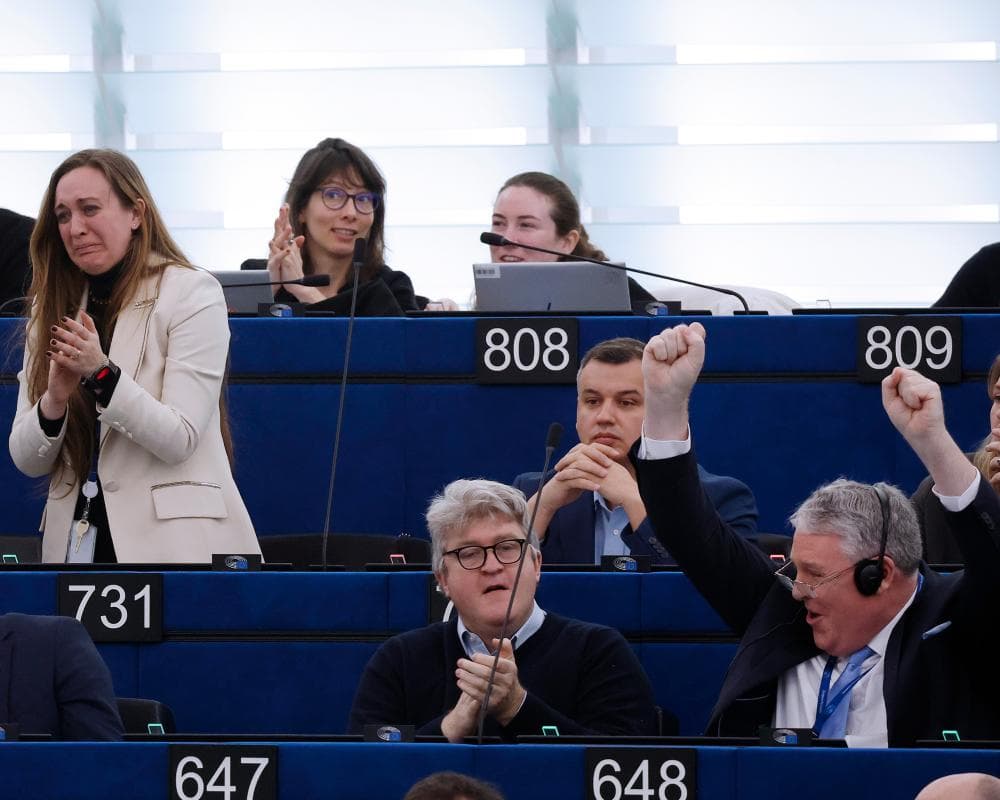
While a trade war with the US would be highly damaging, the EU’s attempts to diversify its markets were also dealt a serious blow by parliament after MEPs voted, by a majority of just 10, to refer the Mercosur trade deal with Latin American countries to the European court of justice.
The decision was condemned by Lange, while the European Commission said the decision was “regrettable”, as did Friedrich Merz, the chancellor of Germany, where car manufacturers also denounced the move.
The European Commission has the power to implement the Mercosur agreement provisionally as it did with the Brexit trade deal with the UK. But Lange warned that if the Commission pressed ahead with such a move, it would plunge the bloc into “huge institutional conflict”.