Loading...
Please wait for a bit
Please wait for a bit
Click any word to translate
Original article by Jon Henley, Europe correspondent
The leaders of three Dutch political parties have agreed a new coalition deal, paving the way for a rare minority government in the Netherlands almost three months after elections that produced an upset victory for the centrist D66 party.
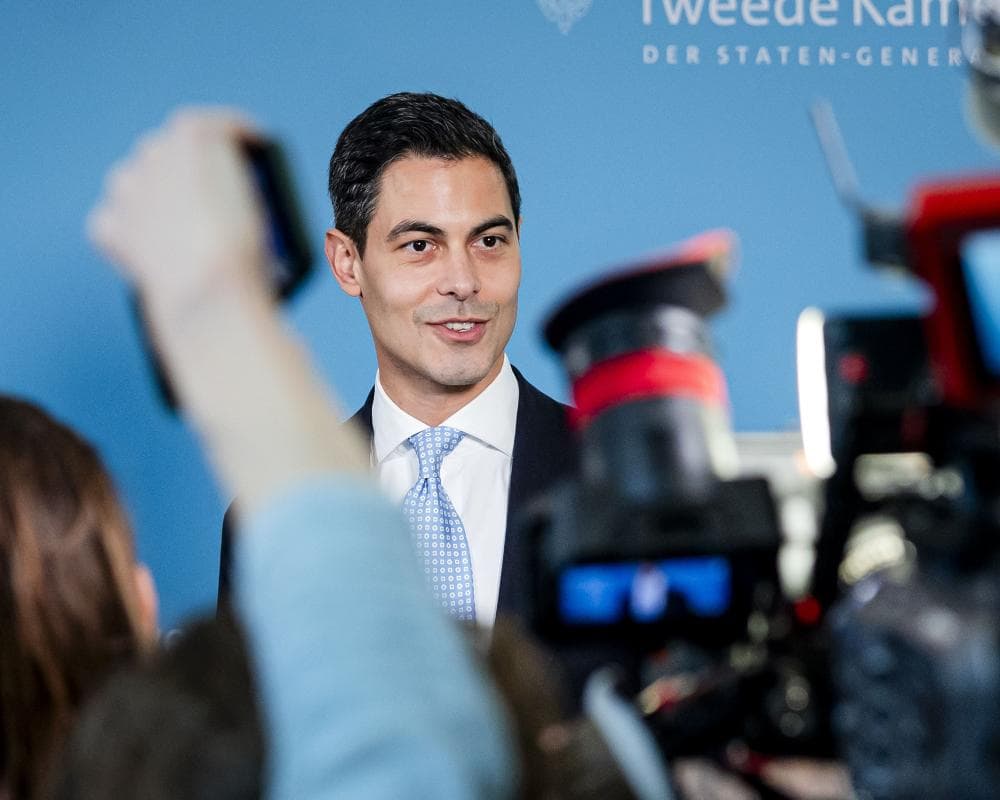
The liberal-progressive, pro-European party, led by the probable new prime minister, Rob Jetten, will join up with the conservative Christian Democrats and the right-wing VVD in a government that holds only 66 seats in the 150-seat lower house.
The new coalition shuts out the far-right Freedom party (PVV), led by the anti-Islam firebrand Geert Wilders, which D66 narrowly defeated in the tight October election. Both parties won 26 seats, although seven PVV MPs have since broken away.
“We’re incredibly eager to get started,” said Jetten, 38, who will become the Netherlands’ youngest ever prime minister, announcing the accord on Tuesday night. “We’re going to do it as a three-party coalition, but we’d also like to work with other parties.”
He added: “We now want to get started on all the major issues facing us – international security, domestic security, providing affordable homes, getting migration under control and investing in the new economy.”
The government’s plans, due to be announced in detail on Friday, include “enormous investment” in defence and “in the Netherlands itself”, Jetten said. “We want to set out the finances carefully so that we do not pass debts on to future generations.”
D66 surged to an upset win, spurred by what Jetten called its “positive message”, finishing just 30,000 votes ahead of the PVV, the largest member of the shortlived outgoing coalition until Wilders pulled out in a row over immigration.
The new cabinet should now be formally sworn in by mid-February, but will have to work with opposition parties in the fragmented Dutch parliament to pass legislation. It also lacks a majority in the senate, which can block laws passed by the lower house.
The three parties made the highly unusual choice to govern without a majority after the VVD leader, Dilan Yeşilgöz, refused from the outset to consider including the left-leaning GroenLinks/PvdA alliance, which won 20 seats, describing it as too radical.
Similarly, efforts by the VVD to include the radical-right populist JA21 party ran into determined opposition from D66. “We do not consider that to be wise at this time, given everything that has to be done,” Jetten said earlier this month.
However, the GroenLinks-PvdA leader, Jesse Klaver, said this month his party was open to negotiating agreements with the new coalition on a case-by-case basis, saying it wanted to provide what he called “responsible opposition”.
Klaver said global instability and the need to “help move the Netherlands forward” meant the government could not afford to fail and his party would support it on big issues such as environmental reforms and accelerating housebuilding.
It would draw the line, however, Klaver said, on any attempts to unfairly increase the tax burden on ordinary working people, reduce healthcare funding or relax employment legislation to make it easier to fire employees.
GroenLinks-PvdA is now the largest opposition party in parliament – and could provide the government with a majority in both houses – after the breakup earlier this month of Wilders’ PVV, which lost almost a third of its seats in the election.
The breakaway group, led by a long-serving PVV MP, Gidi Markuszower, attacked Wilders’ election strategy, saying “insulting Islam” was “OK” but “does not solve voters’ problems”, and his failure to enrol any members apart from himself.
However, two other far-right parties, Forum voor Democratie (FvD) and JA21, both gained seats in the election and continue to advance in the polls. Wilders said after the split it was a “black day” but he had “every confidence” his party would survive it.