Loading...
Please wait for a bit
Please wait for a bit
Click any word to translate
Original article by William Christou in Beirut
The US and Iran traded retaliatory strikes on Thursday as US president Donald Trump threatened to escalate the conflict unless Iran stopped attacking ships in the strait of Hormuz.
Iran responded to the latest round of attacks by targeting US-allied Kuwait and Qatar and accused the US of striking near its sole nuclear power plant.
The second consecutive day of tit-for-tat strikes came hours before Iran buried former supreme leader Ali Khamenei in his home city of Mashhad. Khamenei was killed in US and Israeli airstrikes this February at the outbreak of the war.
The “body of the martyred leader of the Islamic Revolution was buried in the memorial hall of the shrine of Imam Reza”, state broadcaster IRIB reported on Friday.
Khamenei’s funeral procession reached the country’s holiest shrine with a huge crowd packing the courtyard, some bearing banners denouncing the US president and reading, “We Will Kill Trump.”
The ayatollah’s son and successor was not seen at the ceremony. Mojtaba Khamenei was wounded in the same series of strikes that killed his father and has since communicated only through written statements.
The renewed attacks on Thursday were the largest since Tehran and Washington signed a memorandum of understanding (MoU) on 17 June aimed at extending the ceasefire and giving space for negotiations for a permanent truce.
Washington was still committed to finding a resolution with Iran and “technical talks continue”, a US official told Reuters, even as president Trump declared the truce was “over”.
Responding to the escalation, Israel’s defence minister, Israel Katz, said his country was prepared to resume its military campaign against Iran if needed, threatening to do so “with even greater force”.
In Iran, officials said strikes targeted the perimeter of Iran’s only civilian nuclear plant in Bushehr province, an area where the UN’s nuclear watchdog has previously warned that attacks could “pose a very real danger to nuclear safety ”.
“Several areas in Bushehr province were targeted today, including the perimeter of the nuclear power plant, a military base in the town of Choghadak and a fishing pier in the south of the province,” said Ehsan Jahanian, the deputy governor of Bushehr, adding there were no reports of casualties so far.
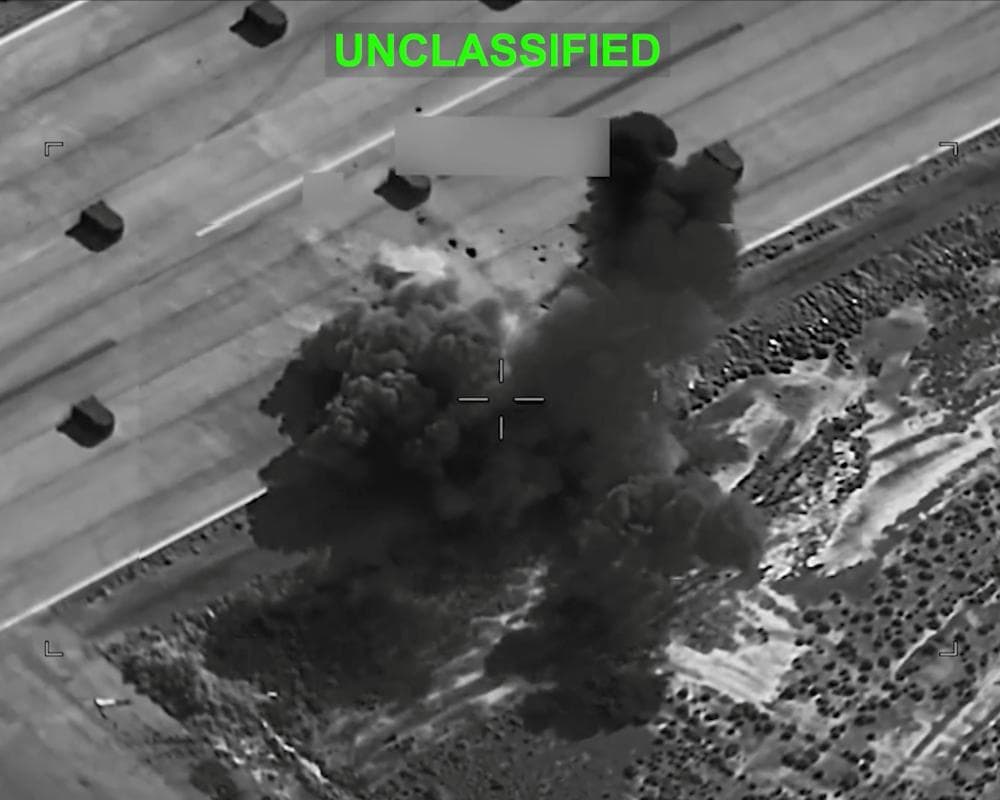
After the strikes, the US president posted videos of explosions in Iran and threatened the country once again.
“This is in retribution for yesterday’s bombing of ships by Iran. If it happens again, it will get much worse!” Trump wrote on Truth Social. Hours before, he had promised strikes would not lead to long-term fighting but would be “very fast”.
His comments and the exchange of fire prompted worries that the ceasefire could break down and raised concerns about the long-term prospects of negotiations. Significant gaps remain between the two countries over issues such as Iran’s control over the strait, as well as inspections of nuclear facilities.
The US military said it hit about 90 targets in Iran, showing footage of strikes on missile launchers and a runway. It said the attacks were meant to degrade Iran’s capacity to “threaten freedom of navigation” in the strait of Hormuz, a critical chokepoint for about 20% of the world’s oil and gas.
The attacks caused oil prices to rise, before they recovered later in the day after calm was restored.
Iran accused the US of war crimes after it said two bridges in the eastern provinces leading to Mashhad were targeted. The bridges constitute key infrastructure for Iran’s cross-border trade with China, which has sharply increased since the start of the war.
Trump has repeatedly threatened to hit bridges, power plants and other civilian infrastructure in Iran. Targeting civilian infrastructure if it is not a military objective could amount to a war crime.
Iranian state media also reported explosions in several cities, including Bushehr, which houses Iran’s nuclear power plant complex. At least three people were killed in Iran’s south-western Khuzestan province, while a firefighter was killed in an airport in the south-eastern city of Iranshahr. Nine members of Iran’s military also died in strikes on Wednesday.
The MoU calls for the reopening of the strait to commercial shipping for 60 days. Iran says it wants to charge fees to ships transiting through the strait, conflicting with the US, which says it is an international waterway and should not have tolls.
Iran continues to view its control over the strait as an important source of leverage in its negotiations with the US, while Trump appears to view strikes on Iran as a way of increasing pressure on Tehran.
Mohammad Bagher Ghalibaf, a senior Iranian negotiator and parliament speaker, said US pressure would not lead anywhere.
“America still hasn’t learned that bullying and breaking promises are no longer cost-free,” he said in a post on X. “Let me put it plainly: if you strike, you’ll get hit.”
Mediators attempted to de-escalate tensions between the US and Iran in an effort to salvage negotiations. The Qatari prime minister, Sheikh Mohammed bin Abdulrahman Al Thani, a key intermediary between the countries, spoke to Iran’s foreign minister, Abbas Araghchi, on Thursday, condemning Tehran’s strikes on ships in the strait.
Negotiations towards reaching a final deal were intended to start after the conclusion on Thursday of Khamenei’s seven-day funeral.
Additional reporting by Patrick Wintour