Loading...
Please wait for a bit
Please wait for a bit
Click any word to translate
Original article by Guardian staff and agencies
Ukraine is creating a “long-range impact” command within its armed forces, President Volodymyr Zelenskyy said in a Friday night address to the nation, as Kyiv’s campaign against Russian energy and logistics has forced Moscow to ban diesel exports and restrict shipping near the Sea of Azov. For months, Ukrainian attack drones have been targeting key energy infrastructure thousands of kilometres across Russia in what Kyiv casts as long-range sanctions against the primary contributor to Russia’s state budget. “Today, I signed a decree establishing a special command within the armed forces – a command aimed at a long-range and, in effect, global impact on Russia in response to this war,” Zelenskyy said. “This command must focus 100% of available resources on further reducing Russia’s capacity to wage war.”
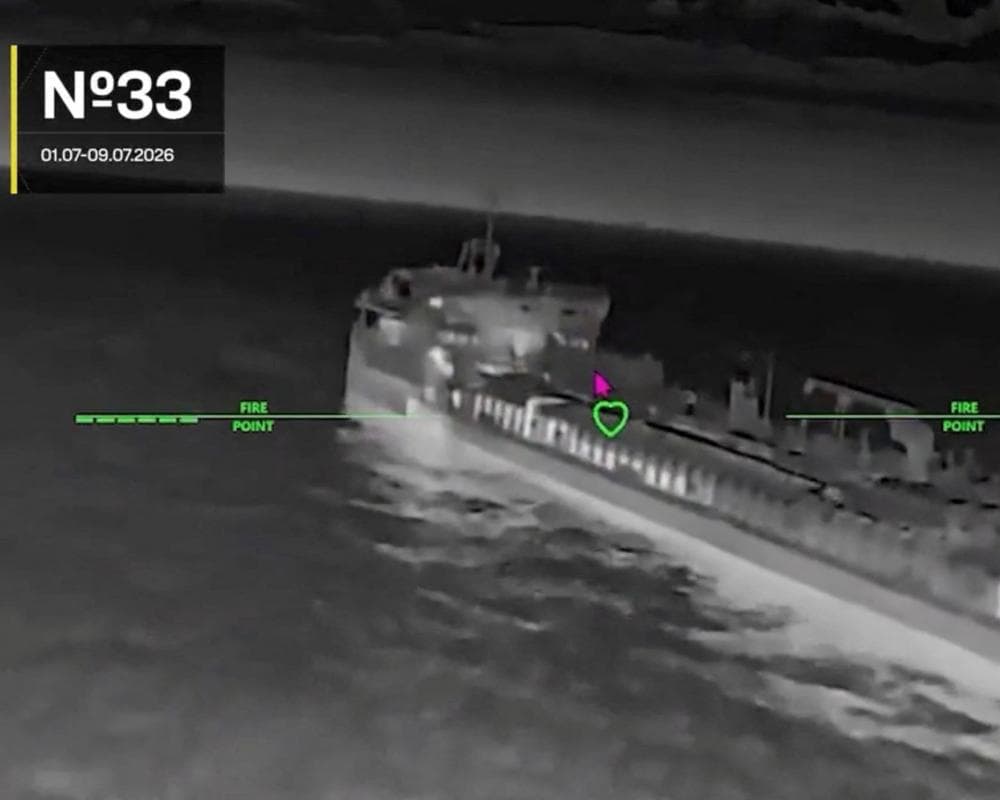
Zelenskyy’s address came on a day Ukraine struck the Ilsky oil refinery in the Krasnodar region, one of the largest in Russia’s south, and the Ust-Luga oil refining complex in the Leningrad region, Ukraine’s general staff said. An oil terminal and an oil depot in the Rostov region were also hit, according to the statement. Ukraine’s attacks have also damaged Moscow’s “shadow fleet”, according to Ukraine drone forces commander and one of the masterminds of the long-range campaign, Robert Brovdi. The smaller country has attacked 10 tankers in the Sea of Azov, among almost 50 fuel vessels damaged in the last five days, Brovdi said.
Russian missile strikes on Kyiv wounded six people on Saturday, Ukraine said, as Moscow escalates attacks on the Ukrainian capital. “The number of injured in the capital has risen to six,” Tymur Tkachenko, head of Kyiv’s military administration, wrote on Telegram. Tkachenko confirmed earlier that Russia was “attacking the capital with missiles” and urged residents to seek shelter. Three people were treated in hospital and three at the scene, he said.
Russia has temporarily stopped shipping through the Don-Azov Channel, a navigable waterway linking the Don River with the Sea of Azov, three grain export industry sources told Reuters on Friday. The move came after Ukraine attacked Russian vessels in the Sea of Azov. Up to one-quarter of Russia’s wheat exports are estimated to pass through the inland sea. Russia’s border guards reportedly notified shipping companies that all requests for passage through the Kerch Strait, which links the Sea of Azov and the Black Sea, would not be accepted from 6:10pm local time on Friday. The notification did not say when the halt would be lifted.
China could play a decisive role in pressuring Russia to begin peace talks to end its war in Ukraine, US Senator Lindsey Graham said on Friday, adding that the next several months would present a window for a diplomatic solution. Graham met President Zelenskyy in Kyiv where they discussed Ukraine’s urgent air defence needs and the Russian sanctions bill, Zelenskyy said. Graham said that bolstering Ukraine’s military capabilities and aligning sanctions with a diplomatic push could force Moscow into talks. “The road to ending this war, the road to peace, passes through Beijing more than it does [through] Washington, Kyiv, or Moscow. China has an oversized influence. I’d like them to use their influence for the good of the world,” Graham told reporters at Mykhailivska Square in the heart of Kyiv.
Lindsey Graham was one of four US senators who on Friday said they had reached agreement with the Trump administration to push ahead with updated legislation on Russia sanctions. “We are very pleased with this significant progress and expect to roll out the legislation very soon,” Senators Richard Blumenthal, Graham, Jeanne Shaheen and Roger Wicker said in a statement. Finishing his 10th visit to Kyiv, Graham told reporters: “We’ve reached an agreement with the White House on a version of the Russian sanctions bill that they will support. It means it’s going to become law.” The legislation, which Graham has been working on with fellow Republicans and Democrats for months, would impose sanctions on countries doing business with Russia, including buyers of its energy exports, over Moscow’s failure to negotiate a peace deal with Ukraine.
Russian forces dropped seven aerial bombs on Ukraine’s eastern frontline town of Kramatorsk on Friday, killing four people including a teenager, the regional governor said. At least nine more people were injured, Vadym Filashkin said on the Telegram app, accusing Russia of deliberately targeting civilians. A residential block, a shop and private houses were damaged, he added, publishing photos of flats on fire.
A former official at Ukraine’s state nuclear company Energoatom has been formally designated as a suspect on Friday as Kyiv’s National Anti-Corruption Bureau (NABU) presses ahead with the biggest wartime corruption case in the energy sector. NABU said on Telegram that the as yet unnamed official, who was responsible for the physical protection and security of Energoatom facilities, is suspected of laundering more than 30m hryvnias ($674,000) from 2023 to 2025. The so-called Midas case, which authorities say involved a $100m kickback scheme at Energoatom, has engulfed figures close to President Volodymyr Zelenskyy and cast a shadow over Ukraine’s government at a time when Kyiv is seeking to demonstrate to western allies that it can tackle high-level corruption.