Loading...
Please wait for a bit
Please wait for a bit
Click any word to translate
Original article by Peter Walker Senior political correspondent
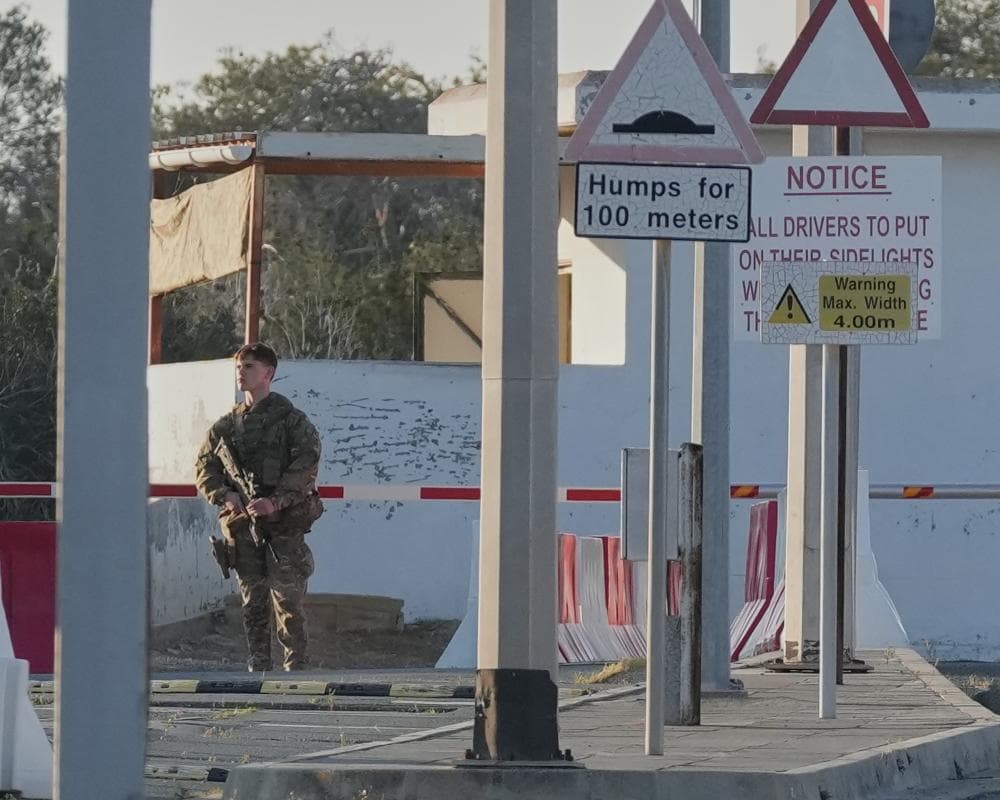
It is “simply not true” that the UK is being dragged into another Iraq-style conflict in the Middle East, Yvette Cooper has said, after an RAF base in Cyprus was struck by an Iranian drone.
The attack was part of a barrage of strikes by Tehran around the Middle East after a US-Israeli attack on Saturday that killed the country’s supreme leader, Ayatollah Ali Khamenei. The UK foreign secretary confirmed ministers were considering possible plans to evacuate about 300,000 Britons from the region.
Britain had no involvement in the initial attack but in a statement late on Sunday, Keir Starmer said he had agreed to let the US use British military bases to attack Iranian missile sites, so as to limit the impact of Iranian strikes.
The decision prompted alarm among some opposition parties, with the Liberal Democrats demanding it be put to a vote in parliament. Asked if the UK risked being pulled into an escalating conflict with no end goal, simply because Donald Trump had asked, Cooper said: “That’s simply not true.”
She told Sky News on Monday: “We took a very specific decision not to provide support for strikes that were taking place over this weekend. We have been clear that we believe there should be a diplomatic process, negotiations process.”
With Iranian missiles and drones causing damage and casualties around the Gulf, as well as in Israel and Cyprus, the UK had to “recognise responsibilities we have around defensive support”, Cooper said, adding: “This is about the defence of our partners in the Gulf and defence of countries where we have so many British citizens and interests in those countries.
“It’s a specific, limited agreement about the defence of Gulf countries, and many of those Gulf countries were not involved in any of the strikes on Iran. So, for example, it doesn’t mean political and economic and infrastructure targets, but there is a significant issue about ballistic missiles and launchers that were effectively pointed at the Gulf, pointed at our partner countries, and countries where we have so many British citizens.”
Asked about the safety of hundreds of thousands of UK nationals in the region, Cooper told BBC Radio 4’s Today programme that about 102,000 people – out of a possible total she put at 300,000 – had registered their presence with UK authorities.
While a full evacuation was being planned for, Cooper said, the sheer numbers involved meant other options were more likely. “We’re sending out rapid deployment teams to the region to work with the travel industry, to work with airlines, to work with those governments in the region as well, on what the options will be to ensure that people can safely return home,” she said.
“When we’ve had situations like this in the past, where we have wanted to make sure that British citizens can get safely home, normally it’s been on a much smaller scale than the number of people and the number of countries involved here, but we’ve normally looked to ensure that people can get back to using their normal commercial routes, the flights that they had booked, and so on, and their industry and their provider can support them.
“But we have also looked at other options where the UK government can also provide support. So we’re looking at the full range of options.”
Cooper said the strike at RAF Akrotiri was an “unmanned drone strike specifically on the airport runway”, but said she was unable to give further further information. The Ministry of Defence confirmed that people who lived at the base were being moved to accommodation nearby on Cyprus “as a precautionary measure”.