Loading...
Please wait for a bit
Please wait for a bit
Click any word to translate
Original article by Sara Braun
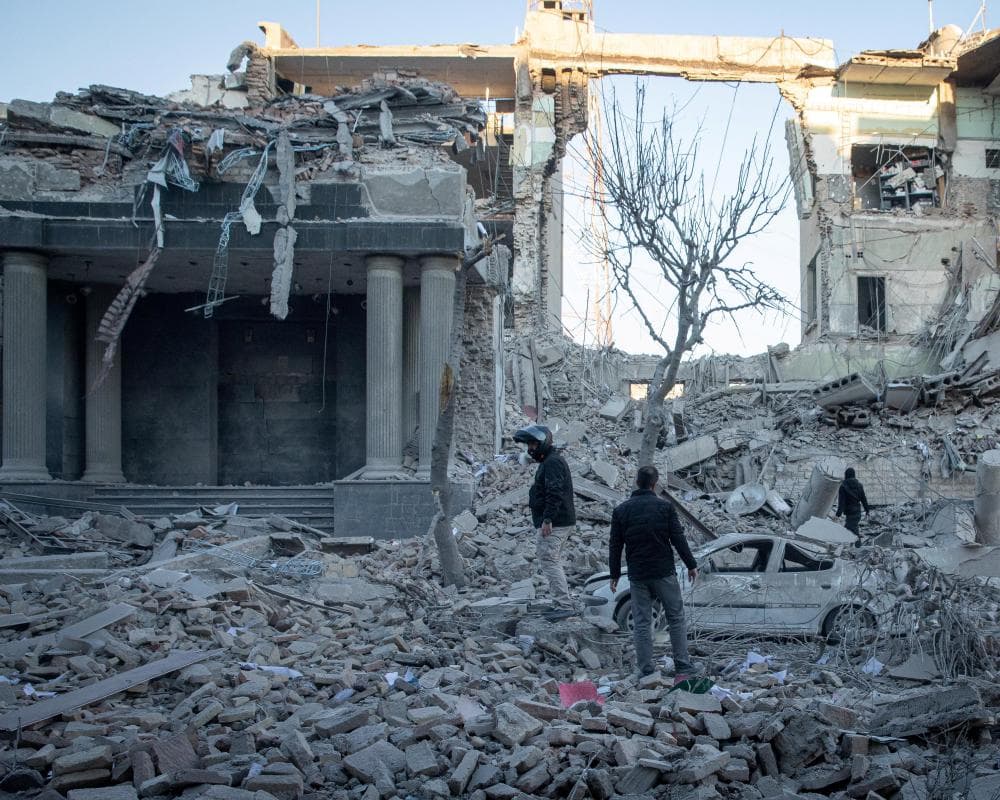
As hundreds of civilians and some US service members have been killed in the aftermath of the 28 February strike against Iran by the United States and Israel, the Guardian asked readers in the US what their thoughts are on the latest military action in Iran.
Their responses were largely disapproving, with some acknowledging that the Iranian regime needed to be toppled, even with a high cost.
“I don’t have any love lost for the ayatollahs,” said Iraj Roshan, a 66-year-old retired cardiologist and US citizen who was born in Tehran, in an interview with the Guardian. “But these wars are won by narrative.”
Roshan fled to Turkey after the Iranian revolution, making his way to Austria and later the US, where he has lived since 1983.
Over the last decade, Donald Trump has denounced US military intervention in other countries. In December 2016, the then president-elect said: “We will stop racing to topple foreign regimes that we know nothing about, that we shouldn’t be involved with.” On the campaign trail – in 2016, 2020 and 2024 – Trump and his allies spoke against foreign intervention, painting Democrats as enablers of war. In a series of social media posts days before the 2024 election day, Trump adviser Stephen Miller repeatedly warned that a win for Kamala Harris, the then vice-president, would lead to young men being “drafted to fight” in a “3rd World War”.
Roshan argues that the US government does not have a strategy in the Middle East.
“I don’t see any way this war is going to end in a way that the US can declare victory without putting boots on the ground or without arming the Iranians themselves,” he said.
“I hate to see that so many American kids are going to be eventually dragged into a war that we cannot win – at least by any definition that we could write down today.”
Meg, a 41-year-old small business owner based in Bay Ridge, Brooklyn, spoke about the impacts of the strike on her community, which is home to the largest Arab community in New York City – approximately 10% of the neighborhood’s population.
“For a lot of my Muslim friends, this is their favorite time of year,” Meg told the Guardian, referring to the holiday of Ramadan, which began on 17 February and continues through 19 March. “So to have this renewed tragedy strike in the middle of that, as somebody on the outskirts who cares about people in my community and in my circle of friends, it breaks my heart.”
Meg also spoke of the persistent terrors that many of her neighbors have faced, first from the threat of ICE raids and then the strikes on Iran.
“That’s been an ongoing drum beat of terror in my neighborhood,” she said. “How much can people take? How much suffering has to be inflicted on them for mindless reasons?”
Barb, a 74-year-old retired mental health counsellor based in North Carolina, wrote in to the Guardian: “We can be sure that Trump has launched this war for selfish purposes.
“Whether to flaunt his power, to control the headlines (away from Epstein), or to entertain himself, this needless war is not for the benefit of the Iranian people,” she continued.
While many lawmakers, US citizens and others around the world have pushed back on Trump for unnecessary US involvement in a foreign regime change, others struck a less critical tone.
“The [Iranian] regime is a very controlling and horrible thing,” Sriram Shanmugam, an 18-year-old in Texas who identifies as a Republican, shared with the Guardian. “My father escaped during the Iranian revolution, and I have many relatives in the Middle East too.”
However, Shanmugam acknowledged that the US is “not doing much to minimize civilian casualties, and that we have no real plan after we finish this operation”.
“What will replace the government of Iran, and will we have boots on the ground? Is there any guarantee that this won’t be our generation’s Afghanistan or Iraq?” he asked.
A 47-year-old social worker in Washington, who asked to remain anonymous, wrote about the impact that another war will have on US veterans.
“I spent 15 years working as a social worker therapist specifically with combat veterans who served in Iraq and Afghanistan,” she said. “Those wars turned millionaires into billionaires and created a lifetime of emotional pain and physical pain for those who served.”
She also pointed to the myriad of domestic issues that people in the US are facing, including an affordability crisis and fewer jobs.
“People in our country are suffering on the streets, homeless, without health insurance, without hope,” she wrote. “And this is where the government focuses its money and energy?”