Loading...
Please wait for a bit
Please wait for a bit
Click any word to translate
Original article by Dharna Noor with graphics by Aliya Uteuova
Donald Trump’s war on Iran has triggered shocks in fossil fuel markets, exposing the perils of an agenda that prioritizes “drill, baby, drill” while sabotaging renewable power and energy efficiency in the US, experts and advocates say.
The US-Israeli war on Iran has already led to hundreds of deaths, created an ecological crisis linked to strikes on oil depots and sent fossil fuel prices haywire across the globe.
Critics say the war also shows the inherent instability of dependence on oil and gas: unlike wind and solar power, fossil fuel-based energy requires constant inputs of products whose availability and costs are determined by the global market.
Since the strikes on Iran began late last month, oil prices soared past $100 a barrel to their highest price since the 2022 Russian invasion of Ukraine before falling back to the still unusually high price of about $92 late on Wednesday. By Thursday morning, the price was back over $100. The spike has pushed up the cost of gasoline – in which crude oil is a key component – nationwide. And it has sparked concern about broader inflation, which is often triggered by higher crude prices.
The president this week dismissed concerns about surging prices, telling Reuters that if gas prices “rise, they rise”, and later writing on social media that oil spikes are a “very small price” to pay for US safety and that “ONLY FOOLS WOULD THINK DIFFERENTLY”. But on the campaign trail and in the White House, Trump repeatedly pledged to bring down the price of household electricity and gasoline by “unleashing” American fossil fuels and boosting energy “independence” and “dominance”.
It’s an “emperor has no clothes moment” for Trump’s pro-fossil fuel policies and claims to support the working class, said Collin Rees, US policy manager at the climate research and advocacy non-profit Oil Change International.
“Americans are seeing, in real time, the deep failings of Trump’s strategy,” he said. “We’re seeing that he’s not doing anything to provide energy stability or price stability.”
The “drill, baby, drill” agenda could have never protected Americans from oil shocks, said Michael Klein, a professor of international economic affairs at Tufts University.
“With a worldwide market, there’s a more or less single price for crude oil,” he said. “The US can’t just set the price.”
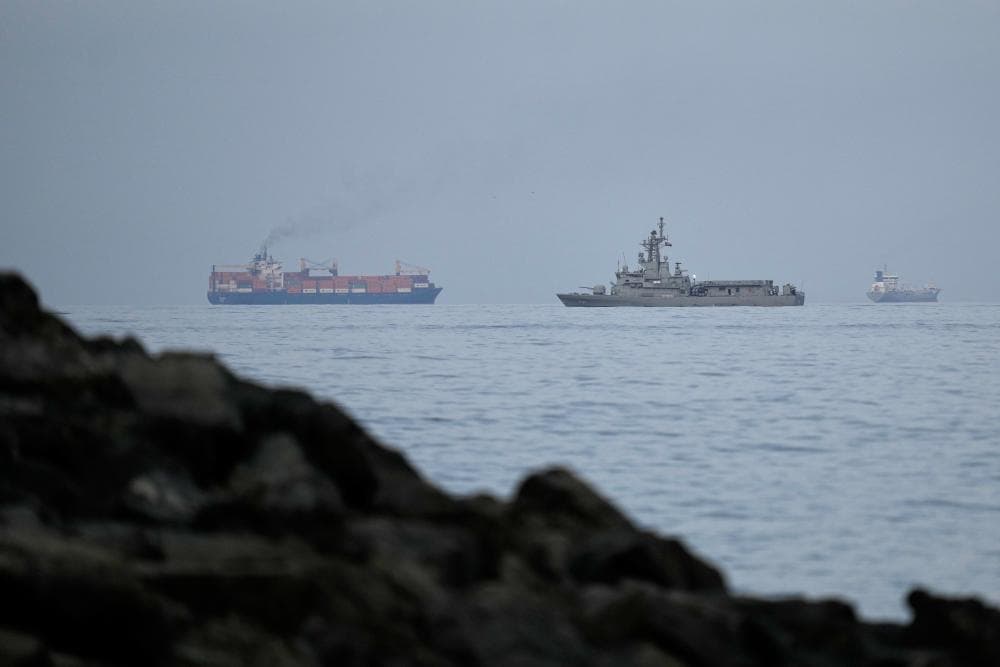
The US-Israeli strikes on Iran have closed off the strait of Hormuz, a crucial supply route through which about 20% of global oil flows. On Wednesday, three ships were hit by unknown projectiles in the channel, with two of the ships sustaining damage and a third catching fire.
No matter its origin, the price of oil changes rapidly amid these kinds of threats to the global market.
Even fossil fuels extracted in the US depend on global supply chains, because not all kinds of oil produced domestically can be easily refined and used in the US. Some must be processed abroad, according to energy finance expert Gerard Reid.
“We have this weird situation where you might think you’ve got lots of oil, but actually you have the wrong type of oil,” said Reid, who co-hosts of the Redefining Energy podcast, on a Monday press call hosted by the Global Strategic Communications Council, a climate group. “These interdependencies mean that if you have one or two key pieces of infrastructure that are destroyed, you could have a lot of problems.”
Amid the fog of war, even perceived threats to supply and demand can cause high levels of volatility, said Isabella Weber, an economics professor at the University of Massachusetts Amherst. On Monday, crude prices soared past $119 per barrel, then just hours later dropped by $35 after Trump said the war was “very complete, pretty much”, and finance ministers said G7 countries were “ready” to release petroleum from emergency reserves.
“In a chaotic situation like the one we are living through, no one knows exactly how supply is evolving,” she said. “There is very little clarity on how deep or extended the supply disruptions will be. So, market prices are anything but rational.”
The energy supply crisis caused by the war on Iran has raised fears of potential stagflation, where economic activity stagnates but inflation increases. It’s a phenomenon that infamously characterized Jimmy Carter’s presidency in the 1970s.
But the risk of a Carter-era crisis is low, said Klein of Tufts University, in part because central banks have learned to better shield the economy. Since the 1970s, the US has also made great strides in energy and fuel efficiency, he said.
Carter is known for his unpopular efforts to conserve energy through “personal sacrifice”, promoting shorter showers and lowered thermostats. But he also kicked off new legislation, standards, and policies to make homes and vehicles more efficient.
“Cars in the 1960s and 70s were gas guzzlers. There were not 55 per mile hour or five miles per hour speed limits [which increase fuel efficiency]. There was less insulation in homes, so you had to use more oil to keep homes warm,” he said. “Think about the big Cadillacs of Bruce Springsteen’s songs versus now where we have the Prius … If you look at the amount of oil consumed in the United States relative to real GDP, it’s gone down.”
Moves to cut fossil fuel dependence can shield Americans from oil shocks. But Trump has taken a sledgehammer to those efforts.
As Trump has railed against efficient lightbulbs and appliances, he has also overseen the elimination of tax credits for home efficiency upgrades and electric vehicles, and even launched a proposal to kill the widely popular Energy Star program for efficient appliances before eventually walking it back. These rollbacks benefit fossil fuel companies looking to increase dependence on their products, but increase costs for working-class Americans, said Rees of Oil Change International.
Trump has also paused and canceled wind and solar projects and slashed incentives for renewable energy development. But those carbon-free power sources could help protect Americans from the volatility of fossil fuel markets, said Rees.
“You don’t need to continually supply a solar panel with oil or gas once it’s up and providing energy,” said Rees. “With oil or gas, there’s a constant need for that commodity which is vulnerable to shocks. But wind and solar power are going to be produced because the sun is going to shine, the wind is going to blow.”
The war on Iran has showed other “horrors” that fossil fuels can cause, said Rees. Over the weekend, strikes hit fuel depots in Tehran and Karaj, causing huge fires and plumes of smoke. Streets filled with soot and toxic air filled residents’ lungs, and toxic rain mixed with oil fell from the sky.
“War is hell and the human cost is born on so many levels, but it doesn’t have to be this way,” said Rees. “The quicker that we can conduct a managed transition off fossil fuels, the better off we will be in terms of affordability and energy access, and in terms of potentially ending deadly oil-fueled wars.”