Loading...
Please wait for a bit
Please wait for a bit
Click any word to translate
Original article by Kat Lay in Geneva
Global health leaders are considering whether vaccines or medicines still in development could be used to fight Ebola in the Democratic Republic of the Congo, as the World Health Organization’s chief said he was deeply concerned by the outbreak’s speed and scale.
Dr Tedros Adhanom Ghebreyesus said there had been at least 500 suspected cases of Ebola and 130 suspected deaths in DRC since the new outbreak began – up from about 200 cases and 65 deaths when it was announced on Friday.
Dr Mesfin Teklu Tessema, senior director of health at the International Rescue Committee, which works in the DRC’s Ituri Province, where most cases have been reported, told the Guardian he expected current known cases were “the tip of the iceberg”.
Spread across the porous border to South Sudan, he said, was probably “a matter of when”. He warned that a weak public health infrastructure there meant “we are actually flying blind”.
The IRC provides humanitarian relief in the region, including support to health clinics. Tessema said there was a severe lack of basic protective equipment, such as gloves, masks and goggles, for healthcare workers seeing patients in the area.
He added: “Ebola is a very deadly disease – this strain has a mortality rate between 30% and 50%. That is with availability of care. When care is not available, when people are arriving late, that risk of mortality could be higher than that.”
There are a number of strains of the virus that can cause Ebola. The Bundibugyo strain, which has been identified as responsible for the current outbreak, has no approved vaccine or treatment.
Scientists from the DRC and Uganda published the genome of the virus online on Monday night. Experts who examined the genetic data said it suggests the outbreak was recently sparked by a “spillover event”, meaning a human became infected through contact with an infected animal, and has since spread from human to human.
“That is useful because it suggests this outbreak can potentially be traced and interrupted as it has been in the past. Repeated independent spillovers from an animal source would complicate the efforts to stop the outbreak,” said David Matthews, Professor of Virology, University of Bristol.
A WHO official in Ituri province, said the outbreak could take a long time to bring under control.
“I don’t think that in two months we will be done with this outbreak,” Anne Ancia, the WHO’s representative for the DRC, told reporters in Geneva at the World Health Assembly, pointing to a recent Ebola outbreak that took two years to end. Nearly 2,300 people died between 2018 and 2020 in the deadliest outbreak in the DRC to date.
“At the international level, [we are] looking at what candidate vaccines or treatment are available and if any could be of use in this outbreak,” Ancia added.
In Uganda, people have been told to avoid hugging and holding hands, and the country’s annual Uganda Martyrs’ Day celebrations on 3 June, which usually involve millions of people gathering, has been cancelled.
While the WHO recommends screening at border crossings with the DRC and Uganda, it urged other states not to place restrictions on travel and trade. Some countries, including the US, have placed bans on travellers from the area. Rwanda has closed its borders with the DRC.
A senior official at Médecins Sans Frontières (MSF) said the response was likely to be complicated by a lack of access to healthcare in the affected area, where there is a lengthy armed conflict.
Tedros said the number of cases and deaths would change “as field operations are scaling up, including strengthening surveillance, contact tracing and laboratory testing”.
Thirty cases in Ituri have been confirmed by laboratory testing, and one death and case in Kampala, Uganda. A US citizen has also tested positive and has been transferred to Germany.
The WHO is convening a technical group for advice on what tests, vaccines and treatments could be useful. Vaccines are only available for the Zaire strain, which was identified in 1976. A 2023 campaign in the DRC vaccinated about 55,000 frontline workers in the Ituri and neighbouring North Kivu provinces against that strain.
Ancia said the expert view was those vaccines “cannot be used in the current response” although “a lot more studies need to be done”.
The outbreak, made public on Friday, was declared a public health emergency of international concern (PHEIC) by Tedros in the early hours of Sunday morning.
On Tuesday, he said: “This is the first time a director general has declared a PHEIC before convening an emergency committee. I did not do this lightly … I’m deeply concerned about the scale and speed of the epidemic.”
Tedros said reports of Ebola cases in urban areas, where the virus typically spreads more easily, were cause for concern. Cases among health workers indicated potential spread in clinics and hospitals, he said, and there was “significant population movement in the area” for work and also due to conflict.
The province of Ituri was “highly insecure”, he added. “Conflict has intensified since late 2025, and the fighting has escalated significantly over the past two months resulting in civilian deaths. Over 100,000 people have been newly displaced. And in Ebola outbreaks, you know what displacement means.”
Dr Maria Guevara, the international medical secretary at MSF, who has worked in the DRC, said: “The fact is the system is broken and the community is not able to access any type of health care.”
She said conflict had made routine immunisation extremely difficult, and that most of the DRC had experienced severe outbreaks of cholera only last year.
Speaking at an event in Geneva organised by the Independent Panel on Pandemic Preparedness and Response, she added: “You put Ebola on top and then you want to be able to do the proper protocol and case management, proper case treatment, but they’re inundated with all the other outbreaks, also dying of maternal mortality, from malaria, from everything else. And you’re expecting the community to be able to understand why you’re coming in with a zoot suit [slang for the personal protective gear worn by health workers].”
Ancia said the WHO was rushing to address the current crisis and had deployed more than 40 experts to the field, alongside national responders.
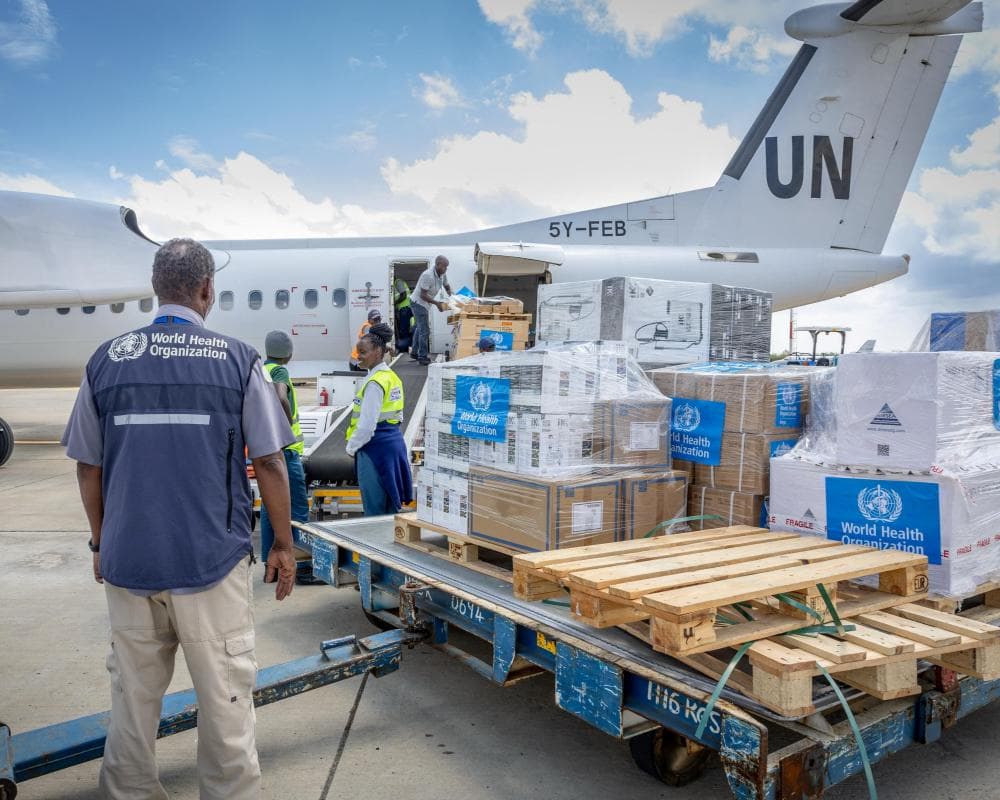
The UN health agency had also sent 12 tonnes of supplies, she said, including personal protective equipment for frontline health workers, from the DRC’s capital, Kinshasa, and Nairobi in Kenya.
Ebola spreads through direct contact with body fluids from infected people or animals and causes symptoms that can include high fever, vomiting and internal and external bleeding. According to the WHO, the average fatality rate from Ebola is about 50%, varying from 25% to 90% in past outbreaks. This is the 17th Ebola outbreak in the DRC since the discovery of the virus.