Loading...
Please wait for a bit
Please wait for a bit
Click any word to translate
Original article by Martin Belam
Good morning. The men’s football season is reaching the sharp end. This week, Arsenal were crowned Premier League champions and last night Aston Villa won the Uefa Europa League. The men’s Fifa World Cup is just around the corner.
But fans in England are also at the sharp end: rising prices inside and outside grounds, kick-off times being altered on the whim of TV channels, and a creeping sense that some clubs are desperate to replace the “legacy fan” with a premium-paying “high-yield customer”.
For today’s newsletter, I spoke to our football reporter, Jacob Steinberg, about the “remorseless commercialisation” of the game and whether football is pricing out once and for all the very people who give the beautiful game its soul. First, the headlines:
UK politics | Andy Burnham is backing Shabana Mahmood’s controversial changes to the immigration system, his allies have said, in a blow to those in Labour who hope to soften them.
AI | The Electoral Commission has called for new legal controls over misinformation from AI chatbots, after a thinktank found they had made serious mistakes during the recent Scottish election.
Ebola | Doses of a potential vaccine against the Bundibugyo virus that is causing an Ebola outbreak in central Africa will not be available for six to nine months, the World Health Organization said.
Middle East | Israel’s far-right national security minister has sparked a diplomatic crisis by publishing footage of Israeli security forces abusing international activists who were detained as they tried to sail to Gaza with aid.
UK news | Rainwater harvesting, the use of grey water in homes and an urgent campaign to reduce water usage across society are vital to prevent water shortages of 5bn litres a day by 2055, the government has been told.
Whether it is paying to get on a season ticket waiting list, shelling out for multiple pricey streaming services to follow a single season, or finding out your junior concession has been scrapped, the cost of being a men’s football fan is reaching a breaking point.
While the “product” has never been more popular globally, the local match-going experience is being treated as an inconvenient relic of a by-gone era. “It feels like fans are being price-gouged left, right, and centre,” Jacob says. “Clubs have to be really careful. Part of the Premier League’s attraction is the atmosphere of the English crowd, and you risk losing that by chasing the one-match-a-season transactional fan.”
***
What price loyalty?
The Football Supporters’ Association (FSA) has launched the #StopExploitingLoyalty campaign to combat what it describes as a coordinated attack on match-going fans. Premier League clubs are increasingly squeezing their core supporters through price hikes, with 19 out of 20 teams raising season ticket prices this summer. You can spend as much as £2,367 for a seat at Tottenham’s stadium, and at the time of writing it isn’t even guaranteed they will be in the Premier League come August. Liverpool’s ticket prices have risen by more than 800% since 1990.
Most controversially, the FSA highlights moves to scrap or drastically reduce concessions for children and senior citizens, effectively pricing out the next generation and the most loyal long-term fans in favour of more affluent, one-off visitors. And it isn’t just the Premier League. I paid £408 for one adult and one U18 season ticket at Leyton Orient for the 2023/24 season. In 2026/27 that will be £551, a one-third rise in the price in the space of a couple of campaigns.
Jacob says the “expanded and quite bloated 2026 World Cup” will see the worst of this.
“Tickets for the final are going for about $10,000. People who normally follow England to every tournament are thinking this might be too far; it’s hard to justify that level of expense,” Jacob says.
It isn’t just the matches themselves. Host cities have been setting exorbitant fees for public transportation to stadiums, in huge contrast with events like Euro2016 in France, where a matchday ticket included free public transport.
***
The beautiful game?
The weekly match-going experience for supporters also feels like it is being degraded. The practice of having to pay for a place on the waiting list for season tickets became widespread in the 2010s, as did becoming “a member” (for a fee) to have even a chance of going to a match. The days of just rocking up to a top flight game and paying cash at the turnstiles are long gone.
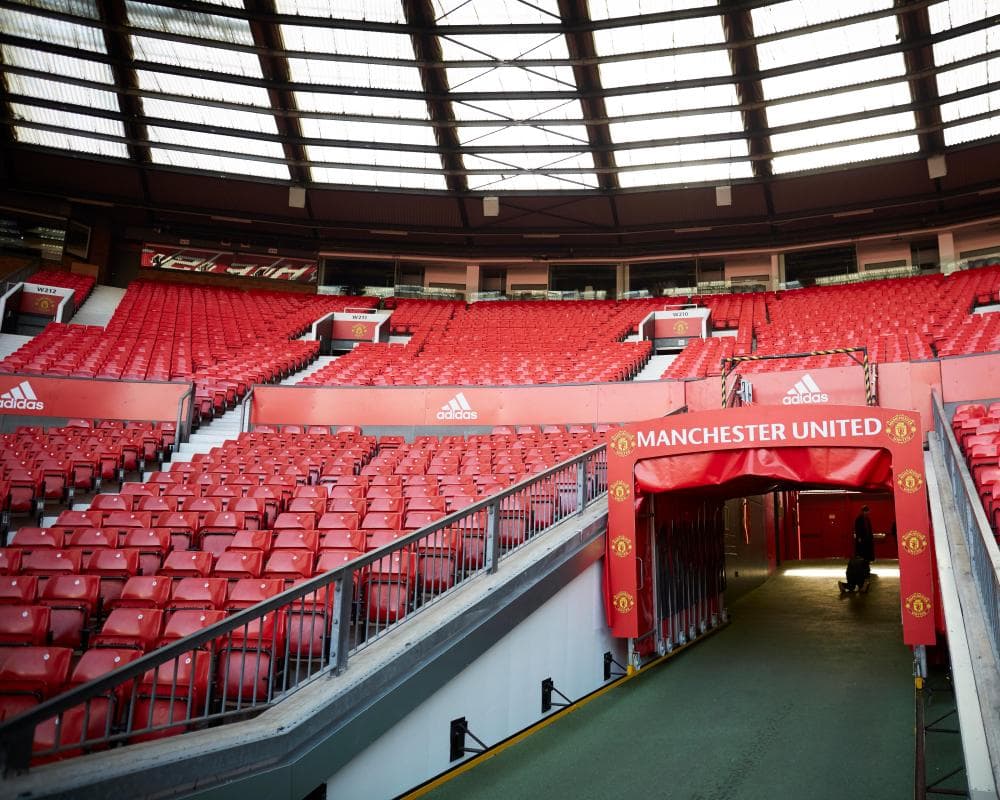
Jacob says there is a feeling among fans that some clubs would quite like to have fewer “legacy supporters” in their stands. “These are local people who have been going for years,” Jacob says. “They have their routine: they go to the pub with mates, they go to the game, then they go home.” No on-site refreshment purchases pre-game. “They don’t spend loads in the club shop because it’s not an ‘event’. There’s a definite feeling that clubs would quite like to squeeze them out, impose dynamic pricing, and attract more ‘transactional’ fans who spend big once a year”. 1,100 supporters at Manchester United’s Old Trafford are being shifted from their longstanding seats near the dugout so that they can be converted to be part of higher-priced hospitality packages.
Matches are moved all the time for television schedule purposes with little regard for whether away fans will have trains available to get home afterwards.
***
Supporting from the sofa
“If I look back 30 years – and I’m probably showing my age – people’s first live football experience was often turning on Channel 4 on a Sunday afternoon for Football Italia. That was a way for people to connect easily without paying”, Jacob says.
“The Champions League on ITV allowed for that connection. Now you have to pay, and the competition is so drawn out that I wouldn’t be surprised if people only properly connect with it during the latter stages.” That is, if they can afford it.
A symbolic low point came this week: it was announced that for the first time in the competition’s storied history, the men’s Uefa Champions League final – this year featuring Arsenal – will not be free-to-air. If you don’t have the correct TNT Sports subscription (between £20 and £27 per month depending on your provider), you don’t see it. It is a far cry from the days when the biggest games could be a shared national moment, rather than a premium add-on. “It feels like things are being chipped away,” Jacob says.
One consequence of competition law preventing football authorities selling rights packages to a single broadcaster means armchair fans now have to outlay on a spread of channels, with the Premier League, for example, broadcast across Sky Sports, TNT Sports and Amazon Prime. It may have driven up competition between broadcasters, but it has hit consumers in the pocket. Fans are paying almost 60% more than they were five years ago.
***
One rule for some
The EFL made waves this week when they kicked Southampton out of the Championship playoff final for allegedly spying on semi-final opponents. It was strange to see a football authority move so swiftly and decisively, it is not what we are used to.
While the EFL acts with a heavy hand, the Premier League’s biggest cases continue to drift. Manchester City’s charges remain a permanent shadow over the league’s integrity and Chelsea’s transition from the Abramovich era appeared to result in a financial hit rather than a sporting one. Fans of Everton and Nottingham Forest have watched their clubs be docked points for financial breaches, while the “big six” seemingly operate under a different gravity. You could be forgiven for thinking the scales are permanently weighted.
There are even moves to allow leagues to stage lucrative competitive fixtures abroad, potentially locking out dedicated domestic fans from one of their team’s home competitive matches.
***
An opportunity elsewhere?
Can non-league and women’s football grow and fill that gap? As the top flight in England tries to become a “global entertainment product” for tourists, perhaps the future of the community-driven, affordable match-day lies further down the pyramid. Cash-on-the-door matches at levels like the Isthmian League or Northern Premier League are all over the country every Saturday afternoon.
There is also an opportunity for the WSL, where the connection between the pitch and the terrace hasn’t yet been commodified out of existence, and matches are widely available on free-to-air streaming platforms.
It needn’t be like this. The FA is working with Uefa to ensure that tickets for Euro2028 include 40% of tickets in two categories: one costing less than £30, the other under £60. In Germany, clubs must have a fan-owned element as the majority shareholder. The cheapest season tickets at major clubs can be reasonably priced – a season ticket at Juventus in 2025 was about £280, for Atlético Madrid £242 and for Bayern Munich about £150. The cheapest Premier League season ticket was £345, and you got punished for that by having to watch West Ham.
The clubs and broadcasters know they have a captive audience. Football is unique in its “stickiness”; you don’t simply switch your allegiance to a cheaper rival because the price of a pie at the ground or a TV subscription has gone up by 20%. It is that deep-rooted loyalty that is being weaponised against the fans.
But as the “concessionary ladder” is pulled up and the stadium experience is hollowed out by technology and exorbitant travel costs, football is testing the limits of that devotion. At some point, the “global product” risks becoming a sterile show performed in front of half-empty stands or silent tourists, having finally priced out the people who provided the noise in the first place.
In the weeks leading up to the World Cup, soccer writer Jonathan Wilson will explain how the tournament became a global phenomenon with cultural, social and political weight that extends far beyond each game. Sign up for the newsletter here.
“London Records in the 90s? COCAINE.” That’s just one of the many brilliant responses Daniel Dylan Wray got when he asked former artists and staff what it was really like at the eclectically rostered, hard-partying record label behind Goldie and Bananarama. Lucinda Everett, newsletters team
Guardian Australia’s Carly Earl and Matilda Boseley make for a fun duo in this video investigation at who is better at spotting AI images – a picture editor or an internet addict. Martin
Palm-flanked pools and political plotting. Tom Phillips visits the five-star JW Marriott hotel in Caracas, where US officials, diplomats and spies have holed up to decide the fate of Venezuela. Lucinda
Would you take your film recommendations from Charli xcx? Cassidy Sollazzo has a look at celebrities acting as public taste-setters on the social platforms. Martin
I enjoyed George Monbiot’s excellent column about the electorate’s failure to punish Nigel Farage and how leaders often profit from the chaos they sow. Lucinda
Football | Aston Villa won their first European trophy for 44 years with goals from Youri Tielemans, Emi Buendía and Morgan Rogers sealing an emphatic 3-0 victory.
Tennis | The world’s top tennis players are planning to protest over prize money by reducing their media appearances at the French Open as their public battle with the grand slams intensifies.
Cycling | Ecuador’s Jhonatan Narváez edged out the Spaniard Enric Mas at the end of Wednesday’s stage 11 to win his third stage of this year’s Giro d’Italia as Afonso Eulálio retained the leader’s pink jersey.
“Burnham ‘backs Mahmood’s plans to tighten rules on immigration’” is the Guardian’s front page today.
The Telegraph says “Don’t cap food prices, Bank warns Reeves”, while the Times’ headline is “Bank chief joins attack on freezing food prices” and the i Paper writes “Food price cap retreat after backlash from supermarkets”. Similarly, the FT runs with “Supermarket backlash forces Reeves into U-turn over grocery price caps”. The Mirror’s take is “Labour’s happy shoppers”.
The Daily Mail splashes on “Putin jets menace RAF place with ‘crazy Ivan stunt”’” and the Sun, on the same topic, says “20ft from World War 3”.
The Daily Express front page is “No thank you to another PM who does not back women” and Metro says “Burnham rival’s rants revealed”.
Competing in the pro-doping Enhanced Games
The Olympian Max McCusker tells Nosheen Iqbal about his decision to sign up for the Las Vegas games where performance-enhancing drugs are encouraged.
A bit of good news to remind you that the world’s not all bad
Punk songs about pensions, unaffordable care home fees and the frustrations of recycling may sound like a story arc from Riot Women, Sally Wainwright’s BBC show about a menopausal rock band, but the NaNaz are the real-life group of women in their 50s and 60s booked solid at clubs and festivals.
The Newport-based musicians worked as nurses, foster carers and ice-cream van drivers, and were inspired by earlier generations of female punk artists such as X-Ray Spex and the Slits. “We like to write and perform songs that tell the truth about things we feel really strongly about,” says bassist and vocalist, Anne-Marie Bollen. The band members’ spontaneity and fun has also attracted younger audiences to their shows.
Sign up here for a weekly roundup of The Upside, sent to you every Sunday
And finally, the Guardian’s puzzles are here to keep you entertained throughout the day. Until tomorrow.